Goa Real Estate Investment 2026: How Infrastructure, Tourism and Connectivity Are Reshaping Maha-Goa
For anyone studying Goa real estate investment 2026, the most important story is no longer limited to beaches, luxury villas or traditional tourist hotspots. The larger story is about connectivity.
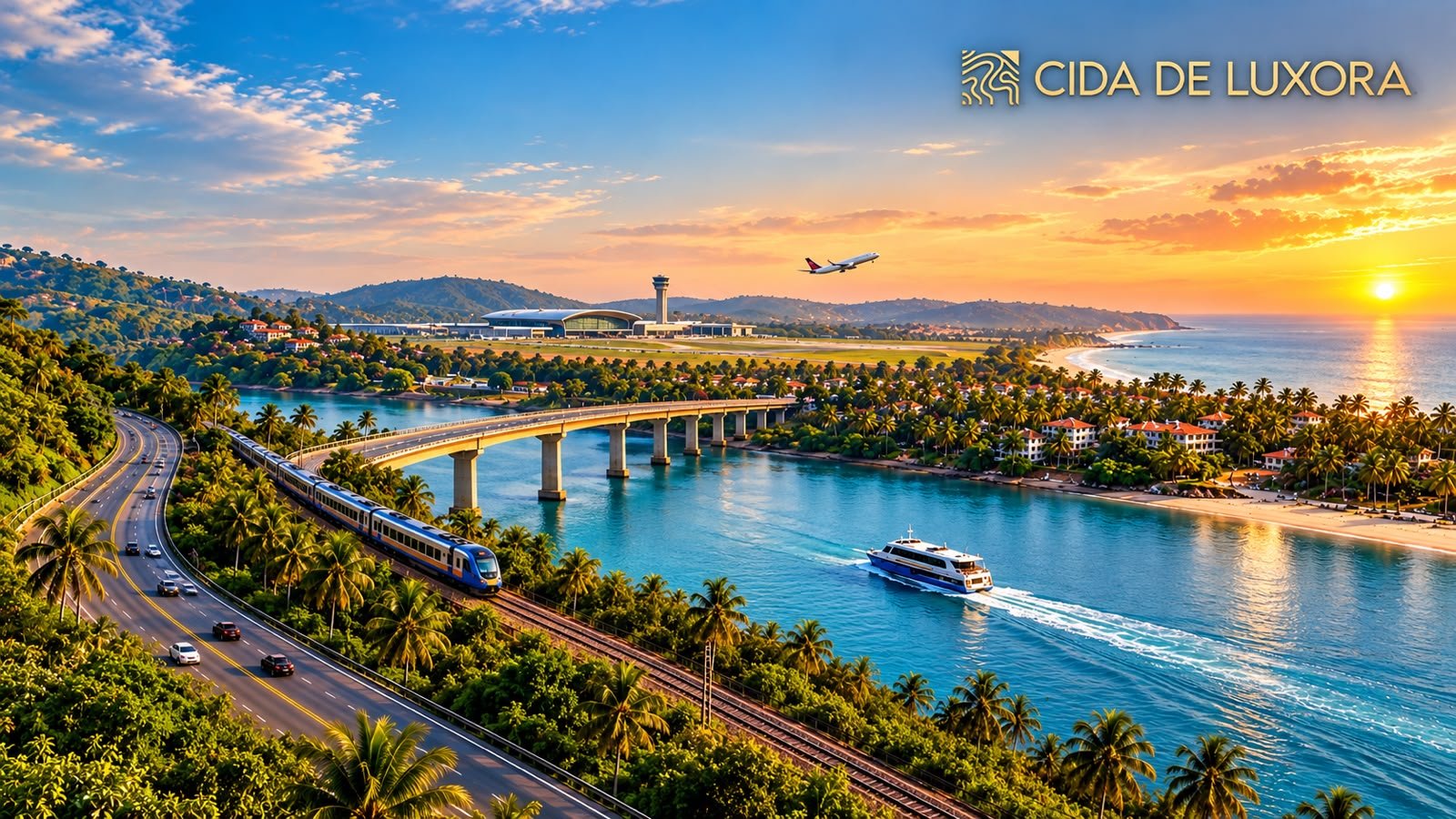
Goa and the adjoining Konkan region are entering a phase where roads, airports, railways, waterways, tourism infrastructure, and hospitality investments are increasingly working together. For investors, this matters because better connectivity can gradually change how people travel, where they stay, where businesses operate and which locations become easier to access.
The latest developments make this shift particularly relevant. Goa’s proposed Water Metro has moved forward to the Detailed Project Report stage for a proposed 111-km inland water network, while the new Mumbai–Sawantwadi Road train service has strengthened direct rail connectivity between Mumbai and Sindhudurg. At the same time, the Porvorim elevated corridor is scheduled to open to traffic on September 11, 2026.
For Goa real estate investment 2026, these developments should not be interpreted as automatic indicators of property appreciation. Instead, they provide investors with a framework for understanding how the region’s accessibility and economic geography are evolving.
The investment question is therefore changing from “Where is property already expensive?” to “Which locations are becoming better connected to the wider economic and tourism ecosystem?”
That distinction is particularly important when evaluating the emerging Maha-Goa corridor across North Goa and Sindhudurg.
The Big Story Behind Goa Real Estate Investment 2026: Connectivity Is Expanding
Real estate markets rarely develop in isolation.
When transportation infrastructure improves, the practical distance between locations can change. A destination that once required a difficult road journey can become more accessible through a faster highway, direct railway service, airport connectivity, or multimodal transport.
This is why connectivity has become an important consideration for Goa real estate investment 2026.
The region is now experiencing improvements across several transportation layers:
- Air connectivity through Manohar International Airport (Mopa)
- Highway connectivity through NH-66 and associated infrastructure
- The Porvorim elevated corridor
- Direct Mumbai–Sawantwadi railway connectivity
- Existing ferry and Ro-Ro networks
- Proposed Goa Water Metro connectivity
- Development of national waterways
- Tourism and hospitality infrastructure across North Goa and Sindhudurg
Rather than looking at these projects individually, investors should consider their cumulative effect.
The broader question is whether these improvements can make the region more accessible to tourists, second-home buyers, entrepreneurs, hospitality operators, and long-term residents.
That is the more useful framework for Goa real estate investment 2026.
Investor takeaway
Infrastructure does not guarantee property appreciation. Its investment relevance lies in its ability to potentially improve accessibility, expand catchment areas and support economic activity over time.
Goa Water Metro: A New Dimension of Connectivity
One of the most closely watched developments for Goa real estate investment 2026 is the proposed Goa Water Metro.
According to recent reporting, the project is moving into the Detailed Project Report stage for a proposed 111-km inland water transport network covering nine routes. Kochi Metro Rail Limited has completed the feasibility study and is preparing the DPR. The study is expected to assess impacts on road congestion, travel time, fuel consumption, and emissions.
This is important because Goa already has an established ferry ecosystem.
The proposed Water Metro therefore represents an evolution of an existing transport culture rather than the creation of an entirely new concept.
However, investors should understand the project’s current status accurately.
The Water Metro is proposed and under DPR preparation. Its final cost, funding structure and implementation details are not yet fully established. Therefore, it should be treated as a potential future connectivity catalyst rather than as an operational transport system today.
For Goa real estate investment 2026, that distinction is critical.
Existing waterways create an important foundation
Goa already operates ferry services connecting several communities across its waterways. The state’s ferry infrastructure includes routes such as Panaji–Betim, Ribandar–Chorao, Old Goa–Piedade, Naroa–Divar and several others.
This means future water-based mobility can potentially build upon an existing transportation ecosystem.
The strategic significance is broader than commuting.
Water-based connectivity can support:
- Tourism movement
- Waterfront destinations
- Leisure experiences
- Local commuting
- Hospitality development
- Destination diversification
For real estate investors, the relevant question is not simply whether a Water Metro will increase property prices.
Instead, the question is:
Could improved water connectivity make more locations commercially and residentially relevant over time?
That is a much more defensible way to assess Goa real estate investment 2026.
Investor takeaway
Water infrastructure could broaden Goa’s accessibility map, but investors should evaluate confirmed infrastructure separately from proposed infrastructure.
National Waterways Could Strengthen Goa’s Tourism Geography
Goa’s water infrastructure story also extends beyond the proposed Water Metro.
Several waterways have been designated as National Waterways, including the Mandovi, Zuari, Chapora, Cumberjua, Mapusa and Sal rivers.
The development of waterways has implications for both transportation and tourism.
As infrastructure improves, destinations that were previously viewed mainly as local or recreational locations can potentially become part of larger tourism circuits.
This is relevant to Goa real estate investment 2026 because destination expansion can influence where visitors stay, where hospitality businesses locate and where second-home demand develops.
However, the investment thesis should remain evidence-based.
A waterway becoming operational does not automatically translate into residential appreciation. The effect depends on several factors, including accessibility, tourism demand, land-use regulations, infrastructure quality, environmental considerations and the availability of supporting amenities.
That is why sophisticated Goa real estate investment 2026 analysis needs to go beyond infrastructure announcements.

Porvorim Elevated Corridor and the Road Connectivity Story
Road connectivity remains fundamental to Goa real estate investment 2026.
The six-lane elevated Porvorim corridor is scheduled to open for traffic on September 11, 2026, following its inauguration on September 9. The 5.50-km corridor has been reported at a project cost of approximately ₹664.6 crore.
Porvorim is strategically important because it sits along a major movement corridor in North Goa.
For residents, tourists, and businesses, improvements to road movement can influence travel reliability and accessibility.
For property investors, the more important consideration is how these improvements interact with the existing road network.
NH-66 remains a major north-south transport spine through the region. As different sections and associated infrastructure continue to improve, the practical relationship between North Goa, South Goa, Maharashtra and the Konkan region becomes increasingly important.
This strengthens the case for viewing Goa real estate investment 2026 through a corridor-based lens rather than looking exclusively at traditional tourist neighbourhoods.
Investor takeaway
Improved road infrastructure can strengthen regional accessibility, but investors should assess the actual location’s road access rather than assuming that every property benefits equally.
Mopa International Airport Is Changing the Regional Accessibility Equation
For Goa real estate investment 2026, few infrastructure developments are as important as Manohar International Airport at Mopa.
The Goa Economic Survey 2025–26 reports that, from its commissioning on January 5, 2023 through January 2026, Mopa handled 14,094,729 domestic and international passengers and 97,383 aircraft movements, connecting 20 domestic and 12 international destinations.
The airport has also entered its Phase III stage. Its terminal expansion is underway at an estimated cost of ₹255.69 crore, with the terminal’s built-up area planned to increase from 65,600 sq m to 83,900 sq m. The airport’s ultimate planned capacity is stated at 35 million passengers.
These numbers are significant for Goa real estate investment 2026 because airports influence more than tourist arrivals.
An airport can support:
- Weekend travel
- Second-home ownership
- Business mobility
- Hospitality development
- International tourism
- Remote-work lifestyles
- Long-stay tourism
- High-value leisure travel
The effect is especially relevant to locations within the broader Mopa–North Goa–Sindhudurg ecosystem.
However, proximity to an airport should not be treated as a guarantee of appreciation.
Instead, investors should evaluate whether the property combines airport access with other fundamentals such as highway connectivity, beaches, tourism destinations, infrastructure, local services and development quality.
Investor takeaway
Mopa has already become a major regional connectivity asset. Its continuing expansion makes airport accessibility an important factor in evaluating long-term Goa real estate investment 2026.
Mumbai–Sawantwadi Rail Connectivity Strengthens the Maha-Goa Corridor
One of the most significant recent developments for the wider region occurred on September 3, 2026.
Indian Railways and the Union government flagged off the new train service between Chhatrapati Shivaji Maharaj Terminus, Mumbai, and Sawantwadi Road. The service strengthens direct rail connectivity between Mumbai and the Konkan region, including Sindhudurg.
Indian Railways had earlier approved the daily Express service on the 510-km route, highlighting its potential relevance for tourism, business, education, employment and regional mobility.
This is particularly relevant to Goa real estate investment 2026 because Sawantwadi occupies a strategically interesting position.
It is close to:
- Goa
- Mopa Airport
- Vengurla
- North Konkan
- Maharashtra’s coastal markets
- Major tourism destinations
This strengthens the argument for considering Sindhudurg not simply as an alternative to Goa, but as part of an interconnected regional destination economy.
Investor takeaway
Direct rail access from Mumbai to Sawantwadi strengthens the region’s long-distance accessibility and adds another transportation layer to the emerging Maha-Goa corridor.
Tourism Remains the Economic Engine
Infrastructure becomes more meaningful when it supports real economic activity.
For Goa, that economic engine remains tourism.
The Department of Tourism, Government of Goa, reported that Goa received 54.55 lakh tourists between January and June 2025, comprising approximately 51.84 lakh domestic and 2.71 lakh international visitors.
Official tourism communication also highlights Goa’s continued development as a year-round destination, with increasing emphasis on experiences, sports tourism, wellness, accessibility and international connectivity.
For Goa real estate investment 2026, tourism matters because property demand in a destination market is influenced not only by permanent residents but also by:
- Vacation homeowners
- Second-home buyers
- Hospitality operators
- Remote professionals
- Long-stay visitors
- Short-stay accommodation demand
- Retail and lifestyle businesses
This creates a broader real estate ecosystem.
A strong tourism destination can support residential, hospitality, commercial and experiential real estate.
But the relationship is not automatic.
The strongest opportunities typically emerge where tourism demand intersects with accessibility, infrastructure and differentiated property offerings.
Investor takeaway
Tourism provides the demand engine; infrastructure determines how efficiently that demand can spread across a wider geography.
Hospitality Investment Is Moving Beyond Traditional Goa Hotspots
Another important signal for Goa real estate investment 2026 is the expansion of branded hospitality into emerging destinations.
A notable example is IHCL’s announcement of a luxury resort in Shiroda, Sindhudurg.
The project is planned across approximately 138 acres and is expected to include 150 rooms, including 46 villas, along with restaurants, a bar and conference facilities.
This type of institutional hospitality investment is significant because large hospitality operators typically evaluate destinations through a combination of tourism potential, accessibility, land availability and long-term market positioning.
The development of high-quality hospitality assets can also contribute to destination recognition and support economic activity.
For Goa real estate investment 2026, this provides another reason to examine the wider Maha-Goa belt rather than concentrating only on established North Goa neighbourhoods.
The opportunity is not necessarily about replicating central Goa.
It can instead be about identifying locations that combine:
Goa accessibility + Maharashtra land availability + coastal tourism + emerging infrastructure.
Investor takeaway
The expansion of organised hospitality into Sindhudurg supports the broader thesis that the region is becoming part of a larger tourism and lifestyle ecosystem.
Why Infrastructure and Real Estate Often Move Together
The relationship between infrastructure and real estate is straightforward at a fundamental level.
Better connectivity can reduce travel friction.
Reduced travel friction can increase accessibility.
Greater accessibility can expand the number of people who can realistically use or visit a location.
As economic and tourism activity develops, demand for accommodation, hospitality, retail, services and second homes can potentially expand.
This is the core logic behind Goa real estate investment 2026.
However, there is an important qualification.
Infrastructure is a catalyst, not a guarantee.
A property still needs:
- Appropriate zoning
- Clear title
- Legal compliance
- Reliable utilities
- Good physical access
- Quality internal infrastructure
- Sustainable planning
- Strong location fundamentals
- Appropriate pricing
- A credible development proposition
Therefore, investors should avoid buying purely because an airport, highway or railway project is nearby.
The smarter strategy is to find the intersection between infrastructure and intrinsic location quality.
Investor takeaway
The best infrastructure-led investment analysis asks not “Will prices rise?” but “How does this infrastructure improve the property’s underlying utility and accessibility?”
The Emerging Maha-Goa Corridor
This is where Goa real estate investment 2026 becomes particularly interesting.
The traditional perception of Goa property has been concentrated around established markets such as Candolim, Anjuna, Vagator, Assagao, Morjim and other North Goa destinations.
Those markets remain important.
But the development of Mopa Airport, improved NH-66 connectivity, new rail connectivity to Sawantwadi and expanding hospitality investment in Sindhudurg are helping investors think more regionally.
The emerging Maha-Goa corridor connects a series of destinations rather than one single property market.
It can be broadly understood as a network linking:
Mumbai → Konkan → Sawantwadi → Sindhudurg → Vengurla → North Goa → Mopa Airport
This does not mean that every location along this corridor will perform equally.
Instead, it creates a framework for identifying locations where multiple demand drivers overlap.
For Goa real estate investment 2026, this is one of the most important changes in investment thinking.
The next generation of second-home markets may not necessarily be defined by being inside a traditional tourist hotspot.
They may be defined by how efficiently they connect to several demand centres.
Investor takeaway
Maha-Goa should be considered a regional investment geography rather than simply a border between two states.
Why Selectivity Matters in Goa Real Estate Investment 2026
A credible investment article should also acknowledge that destination real estate is not a one-way growth story.
Recent market reports have indicated a period of recalibration in parts of the North Goa premium residential market, including price adjustments and inventory considerations.
That makes Goa real estate investment 2026 a market where selection matters.
Investors should examine:
- Location quality
- Developer credibility
- Legal documentation
- Development status
- Infrastructure commitments
- Accessibility
- End-user demand
- Tourism ecosystem
- Exit liquidity
- Total acquisition and development costs
This is especially important for plotted developments.
A plot can offer flexibility and ownership of land, but its ultimate utility depends on infrastructure, planning permissions, construction costs, location and the owner’s intended use.
Therefore, the right approach to Goa real estate investment 2026 is not simply to search for the lowest price.
It is to understand the relationship between land, location, connectivity and future usability.
Investor takeaway
The market is becoming more selective. Strong fundamentals should matter more than short-term narratives.
Where Cida De Luxora Fits Into the Maha-Goa Growth Story
Against this wider regional backdrop, Cida De Luxora has been positioned as a premium plotted development in the Sawantwadi–Sindhudurg region.
According to the project’s published Buyer & Investor Guide, Cida De Luxora is located at Kamblevir village, Taluka Sawantwadi, Sindhudurg, directly on State Highway 180 and approximately two minutes from NH-66. The project materials also state approximately 15 minutes from Vengurla Beach and approximately 30 minutes to Mopa Airport.
This positioning is relevant to Goa real estate investment 2026 because the project is located within the broader connectivity triangle of:
Sawantwadi + Mopa + Vengurla + North Goa
The project’s brochure describes an approximately 11-acre landscaped development with luxury villa plots beginning at approximately 600 sq yards.
The Buyer & Investor Guide describes the development as a gated residential estate with planned internal infrastructure, including 12-metre internal roads, drainage, electricity and water infrastructure, along with underground drainage and STP provisions.
For buyers considering Goa real estate investment 2026, the attraction is therefore not simply the word “Goa”.
It is the combination of regional access and lifestyle positioning.
A Second-Home Proposition Built Around Space and Flexibility
One of the key characteristics of Goa real estate investment 2026 is the continued appeal of second homes.
For many buyers, the objective is not purely financial.
It can include:
- A weekend residence
- A family retreat
- A retirement-oriented home
- A work-from-anywhere base
- A private villa
- A hospitality-oriented property
- A long-term land holding
Cida De Luxora’s villa plots are designed around this flexibility.
The project documents describe approximately 600 sq-yard luxury villa plots, allowing buyers to create a residence according to their own architectural preferences.
The Buyer & Investor Guide also states that curated villa design support and PMC assistance are available, while buyers may alternatively appoint their own architect and contractor, subject to community norms and applicable local regulations.
This flexibility can be particularly attractive for buyers who view Goa real estate investment 2026 as a lifestyle-plus-asset decision rather than simply a conventional apartment purchase.
Investor takeaway
For a second-home buyer, the value proposition is not only the land. It is the combination of location, accessibility, community infrastructure, and the ability to create a customised residence.
Beyond Residential: Luxora Forum
Another differentiating component of Cida De Luxora is its planned commercial component, Luxora Forum.
According to the project’s brochure, the commercial concept includes luxury retail spaces, boutique offices, cafés, wellness offerings, financial services, convenience stores, fitness, and other lifestyle-oriented uses.
This creates a broader mixed-use concept.
For Goa real estate investment 2026, mixed-use planning can be relevant because successful second-home communities often benefit from nearby convenience, services, and lifestyle infrastructure.
Instead of positioning the project purely as a collection of plots, Cida De Luxora’s development concept seeks to combine:
Residential + Commercial + Lifestyle
The project’s investor deck also describes luxury villa plots, highway-facing commercial spaces and office spaces as components of the broader development proposition.
This should still be evaluated based on actual development progress, approvals, final specifications and delivery timelines rather than promotional projections.
Investor takeaway
Mixed-use planning can potentially create a more self-contained lifestyle environment, but buyers should verify each commercial component, specification and delivery commitment before investing.
What Investors Should Verify Before Buying
A strong Goa real estate investment 2026 strategy requires due diligence.
Before purchasing a plot, investors should verify:
1. Title and legal documentation
Review the title documents, approvals, conversion status and applicable development permissions with an independent legal professional.
2. Development infrastructure
Verify the scope and delivery status of internal roads, drainage, water, electricity, sewage and other infrastructure.
Cida De Luxora’s Buyer & Investor Guide states that internal roads, water, electricity and drainage infrastructure are included within its development framework, with applicable charges detailed separately.
3. Total acquisition cost
The base price is only one component.
The Buyer & Investor Guide identifies additional charges including PLC, clubhouse membership, EDC, IDC, EEC and IFMS, while stamp duty and registration are separately payable according to applicable government norms.
4. Intended use
Buyers should determine whether the property is intended for personal use, a second home, future construction, commercial use or long-term holding.
5. Construction economics
For plotted developments, construction costs can be substantial. Buyers should account for architectural design, approvals, contractors, materials, interiors, and ongoing maintenance.
Investor takeaway
The strongest Goa real estate investment 2026 decisions combine macro-level infrastructure research with property-level due diligence.
The Bigger Opportunity: Owning a Position in a Growing Destination
The real opportunity in Goa real estate investment 2026 is not simply about owning property in Goa.
It is about understanding how the geography around Goa is changing.
Mopa has expanded the airport-accessibility map.
NH-66 continues to strengthen the road spine.
The Porvorim elevated corridor is improving movement within North Goa.
The new Mumbai–Sawantwadi service strengthens direct rail access to Sindhudurg.
The proposed Water Metro could eventually add another dimension to Goa’s internal connectivity.
Hospitality investment is expanding into locations such as Shiroda.
Tourism remains a major economic driver.
Together, these developments create a more connected regional ecosystem.
That does not mean every property will become successful.
It means investors now have more variables to evaluate.
For Goa real estate investment 2026, this is precisely why location intelligence matters.
Why Cida De Luxora Deserves Consideration
Cida De Luxora brings together several characteristics relevant to the emerging Maha-Goa investment narrative.
Its published project information places it at Kamblevir in Sawantwadi, on SH-180, close to NH-66 and within the broader Mopa–Vengurla–North Goa tourism ecosystem.
The project is planned across approximately 11 acres, with villa plots beginning at approximately 600 sq yards. Its published amenities include a clubhouse, wellness zones, jogging tracks, landscaped green areas, and gated security.
Its Luxora Forum concept adds a commercial and lifestyle dimension through planned retail, offices, wellness, dining, and convenience offerings.
For buyers researching Goa real estate investment 2026, the project therefore offers an opportunity to evaluate a property proposition within a wider regional growth story rather than within a single established tourist pocket.
The important point is not to assume future returns.
The important point is to ask whether the location, development concept, infrastructure and intended use align with the buyer’s long-term objectives.
FAQ
1. Is Goa real estate investment 2026 a good option for long-term investors?
Goa real estate investment 2026 can be worth considering for buyers looking at a long-term combination of lifestyle, tourism, connectivity and land ownership. The investment case is supported by Goa’s established tourism economy and continuing infrastructure development, including Mopa Airport expansion, highway improvements and proposed water-based connectivity.
However, property investment outcomes depend on factors such as location, title, development quality, pricing, infrastructure and future demand. Investors should therefore evaluate individual properties rather than assuming that infrastructure development automatically means property appreciation.
For official tourism information and visitor statistics, investors can refer to the Goa Tourism Department.
2. Why is infrastructure important for Goa real estate investment 2026?
Infrastructure can influence real estate by improving accessibility and reducing travel friction between residential areas, tourism destinations, airports, commercial centres and major cities.
For Goa real estate investment 2026, important infrastructure developments include Mopa International Airport, NH-66 improvements, the Porvorim elevated corridor, new Mumbai–Sawantwadi rail connectivity and the proposed Goa Water Metro.
These projects should be viewed as potential demand catalysts, rather than guarantees of future property prices.
Investors can track national road infrastructure developments through the Ministry of Road Transport & Highways.
3. How is Mopa Airport influencing Goa real estate investment 2026?
Manohar International Airport at Mopa has become an important part of Goa’s connectivity infrastructure. According to the Goa Economic Survey 2025–26, Mopa handled more than 14.09 million domestic and international passengers cumulatively from commissioning through January 2026 and was connected to 20 domestic and 12 international destinations. The airport is also undergoing terminal expansion.
For Goa real estate investment 2026, this can be relevant because improved air connectivity can support tourism, second-home travel, hospitality and business mobility.
However, investors should consider actual road connectivity from a property to Mopa rather than relying only on a property’s stated distance from the airport.
The official airport information can be checked through Manohar International Airport.
4. What is the Goa Water Metro and why does it matter for Goa real estate investment 2026?
The proposed Goa Water Metro is a planned inland water transport network. As of September 2026, the project is at the Detailed Project Report preparation stage, with a proposed network of approximately 111 km across multiple routes.
The feasibility work has examined the potential use of waterways for passenger movement and the possible impact on road congestion, travel time, fuel consumption and emissions. The final project cost and funding structure are yet to be established.
For Goa real estate investment 2026, the potential importance lies in how water-based transport could expand accessibility between different parts of Goa.
It should not, however, be presented as an operational metro system or as a guaranteed property-value catalyst at this stage.
5. Is North Goa still important for Goa real estate investment 2026?
Yes. North Goa continues to be an important tourism and lifestyle market because of its established beaches, hospitality ecosystem, restaurants, entertainment, international tourism appeal and accessibility.
At the same time, Goa real estate investment 2026 is becoming more regional. Investors are increasingly able to examine locations beyond traditional hotspots by considering their relationship with Mopa Airport, NH-66, Sawantwadi, Sindhudurg and the wider Konkan region.
This makes it useful to compare not only individual neighbourhoods but also connectivity corridors and emerging destinations.
The official tourism ecosystem can be explored through Goa Tourism.
6. Why is the Maha-Goa corridor becoming relevant for Goa real estate investment 2026?
The emerging Maha-Goa corridor can be viewed as the interconnected geography between Maharashtra’s Konkan region, Sindhudurg, Sawantwadi and Goa.
Recent developments are strengthening this relationship. In September 2026, a new CSMT Mumbai–Sawantwadi Road train service was launched, strengthening direct rail connectivity between Mumbai and Sindhudurg.
At the same time, Mopa Airport provides an important air-accessibility node, while NH-66 functions as a major road connection.
For Goa real estate investment 2026, this creates an opportunity to study locations based on their access to multiple demand centres, rather than evaluating them only by their distance from a beach.
7. Can infrastructure development guarantee appreciation in Goa property prices?
No. Infrastructure development should not be treated as a guarantee of property appreciation.
For Goa real estate investment 2026, infrastructure is better understood as one factor that can potentially improve accessibility, tourism flows, economic activity and the usability of a location.
Actual property performance can also depend on:
Purchase price
Location
Legal status
Development quality
Supply and inventory
Local demand
Construction costs
Regulations
Exit liquidity
Overall market conditions
A responsible investor should therefore combine infrastructure research with property-level due diligence rather than purchasing solely because a major project is nearby.
8. Why are Sindhudurg and Sawantwadi relevant to Goa real estate investment 2026?
Sindhudurg and Sawantwadi have an increasingly relevant position within the wider Goa–Konkan tourism and connectivity ecosystem.
Sawantwadi provides access toward Goa, while Sindhudurg offers beaches, coastal destinations and emerging tourism infrastructure. The new Mumbai–Sawantwadi rail connection further strengthens the region’s accessibility from Mumbai.
Institutional hospitality investment is also expanding in Sindhudurg. IHCL has announced a luxury hotel project in Shiroda, planned across approximately 138 acres with 150 rooms, including villas.
For Goa real estate investment 2026, this makes the wider region worth studying as a complementary destination rather than viewing Goa in isolation.
9. What should investors check before making a Goa real estate investment 2026?
Before making a Goa real estate investment 2026, buyers should conduct both market and property-level due diligence.
Key checks include:
Legal: Verify title, ownership, land-use permissions, approvals and applicable development regulations.
Location: Examine actual road access, proximity to infrastructure, airports, beaches, commercial centres and essential services.
Developer: Review the developer’s documentation, project approvals, development commitments and delivery track record.
Financial: Calculate the complete acquisition cost, including applicable taxes, registration, development charges, maintenance and construction expenses.
Purpose: Decide whether the property is intended for a second home, personal residence, future construction, rental use or long-term holding.
For a plotted development, construction and infrastructure costs should be considered separately from the land purchase price.
10. Why could Cida De Luxora be considered within a Goa real estate investment 2026 strategy?
Cida De Luxora is positioned in Kamblevir village, Sawantwadi, Sindhudurg, on SH-180. According to its published project information, the development is approximately two minutes from NH-66, 15 minutes from Vengurla Beach and 30 minutes from Mopa Airport.
The project is planned across approximately 11 acres, with luxury villa plots beginning at approximately 600 sq yards, alongside planned community amenities and internal infrastructure.
Its Luxora Forum concept also introduces planned commercial and lifestyle components, including retail, offices, cafés, wellness and convenience-oriented spaces.
For buyers researching Goa real estate investment 2026, the project’s proposition is therefore linked to the broader Sawantwadi–Sindhudurg–Mopa–North Goa connectivity story.
That said, prospective buyers should independently verify approvals, title, specifications, charges, development status and all contractual terms before making an investment decision.
A More Connected Maha-Goa Is Emerging
The story of Goa real estate investment 2026 is becoming increasingly regional.
Goa’s future property landscape will be shaped not only by beaches and tourism but also by airports, highways, railways, waterways, hospitality, commercial development and changing patterns of mobility.
The proposed 111-km Water Metro, the expanding Mopa Airport, the upcoming Porvorim elevated corridor and the new Mumbai–Sawantwadi railway connection each represent a different part of that transformation.
For investors, the lesson is simple:
Do not follow infrastructure headlines blindly. Understand the infrastructure, study the corridor, inspect the property and then make the investment decision.
Within that framework, Cida De Luxora presents a premium plotted development positioned in the emerging Sawantwadi–Maha-Goa corridor, with published project information highlighting its SH-180 location, proximity to NH-66, Vengurla and Mopa Airport, villa plots, gated community infrastructure and planned Luxora Forum commercial ecosystem.
For buyers seeking a combination of space, connectivity, lifestyle and long-term optionality, Cida De Luxora is worth evaluating as part of a broader Goa real estate investment 2026 strategy.
The strongest investment decisions rarely rest on a single headline. They are built by identifying where infrastructure, accessibility, tourism, lifestyle, and land fundamentals intersect—then conducting the due diligence needed to invest with clarity.
Explore Cida De Luxora, review the project documentation, and arrange a site visit before making an investment decision.