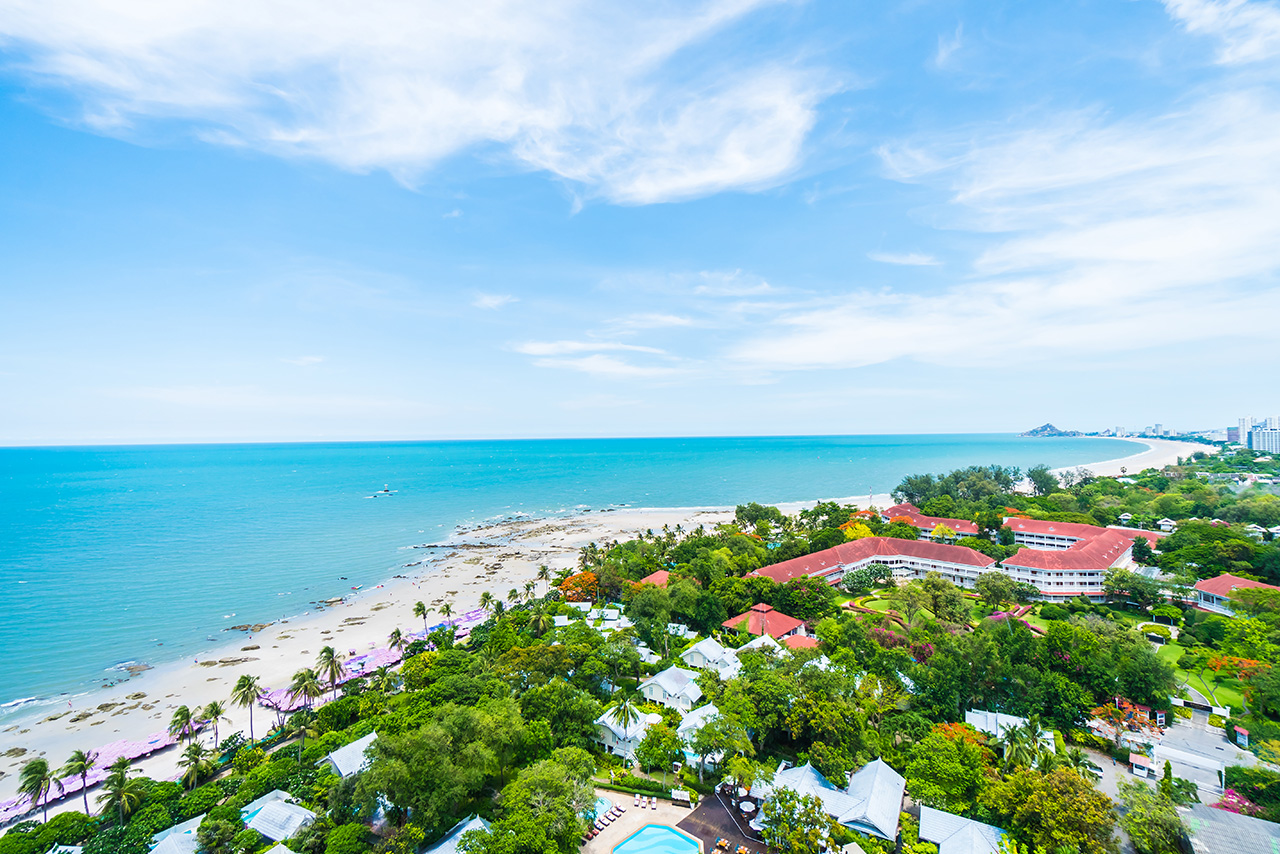
Luxury Villa Plots in Maha Goa vs Delhi: When AQI Turns Homes Into Health Hazards
Every winter, Delhi experiences a transformation that no luxury interior can mask.
Afternoons lose their clarity. Morning sunlight struggles to break through thick layers of smog. Outdoor walks are postponed. Children remain indoors. Air purifiers become permanent fixtures, not optional upgrades. Balconies remain shut. Windows stay sealed.
What was once considered a “seasonal inconvenience” has now become a structural lifestyle risk.
Air quality — once a background statistic — has moved to the centre of daily decision-making. For families, professionals, and investors alike, the question is no longer how big is the house? but how healthy is the environment around it?
This shift in thinking is precisely why conversations around luxury villa plots in maha goa are gaining urgency.
Because when air itself becomes hazardous, location stops being a preference and starts becoming a necessity.
Delhi’s Winter Reality: When the Air Crosses the Line
According to the Central Pollution Control Board (CPCB), Delhi’s Air Quality Index (AQI) frequently enters the “Very Poor” (301–400) and “Severe” (401–500) categories during winter months.
These categories are not symbolic labels. They are officially defined health risk zones.
“Severe AQI may cause respiratory illness even in healthy people and serious health impacts in those with existing diseases.”
By late November and December, Delhi often records PM2.5 levels many times higher than safe limits. Visibility drops. Fog mixes with pollution. Flights are delayed. Road accidents increase. Schools issue advisories.
This is not anecdotal. It is documented, monitored, and repeatedly acknowledged by government agencies.
When air quality deteriorates to this extent, homes — regardless of how premium — begin to function inside a compromised environment.
This is where the comparison with luxury villa plots in maha goa begins to matter.
AQI Explained Simply: Why This Is Not “Just Pollution News”
The Air Quality Index (AQI) is calculated using data from eight pollutants:
- PM2.5
- PM10
- Nitrogen Dioxide (NO₂)
- Sulphur Dioxide (SO₂)
- Carbon Monoxide (CO)
- Ozone (O₃)
- Ammonia (NH₃)
- Lead (Pb)
Among these, PM2.5 is the most dangerous. These particles are small enough to bypass the body’s natural defences, enter the lungs, and even reach the bloodstream.
India’s official AQI categories are defined as follows:
- 0–50: Good
- 51–100: Satisfactory
- 101–200: Moderately Polluted
- 201–300: Poor
- 301–400: Very Poor
- 401–500: Severe
Once AQI crosses 300, the impact is no longer abstract. It becomes physiological.
And when a city repeatedly crosses that threshold every winter, the implication is clear: the environment is no longer supporting healthy daily living.
This is one of the strongest drivers behind the growing interest in luxury villa plots in maha goa.
Why Delhi’s Pollution Gets Trapped Every Winter
Delhi’s winter pollution is not caused by a single event. It is the result of multiple structural factors working together.
1. Temperature Inversion
During winter, colder air stays near the ground while warmer air sits above it. This creates a “lid” that traps pollutants close to the surface.
2. Low Wind Speed
According to SAFAR (System of Air Quality and Weather Forecasting and Research), winter months in North India often experience very low wind speeds, preventing dispersion.
3. Reduced Mixing Height
Mixing height — the vertical space available for pollutants to disperse — drops sharply in winter, concentrating pollution near breathing level.
4. Emission Load
Vehicular emissions, construction dust, industrial activity, and regional pollution transport add to the burden.
The result is predictable and repeatable: pollution accumulates faster than it can escape.
This structural trap is why Delhi’s winter AQI problem is not improving year after year — and why investors are increasingly shifting focus toward luxury villa plots in maha goa, where geography works in favour of dispersion rather than accumulation.

When the Government Declares an Emergency, It’s a Warning Sign
Delhi-NCR operates under the Graded Response Action Plan (GRAP), enforced by the Commission for Air Quality Management (CAQM).
GRAP stages are activated based on AQI levels:
- Stage I (Poor)
- Stage II (Very Poor)
- Stage III (Severe)
- Stage IV (Severe+)
At Stage III and IV, construction is restricted, vehicles are limited, and emergency measures are enforced.
This is not symbolic governance. It is crisis management.
When a city requires emergency protocols every winter, it signals long-term environmental instability.
For families planning children, professionals working long hours, and investors thinking in decades, this instability becomes unacceptable.
This is why luxury villa plots in maha goa are increasingly viewed not as indulgent second homes, but as strategic relocations and legacy assets.
The Indoor Air Myth: Why Apartments Don’t Fully Protect You
A common assumption is that staying indoors shields residents from outdoor pollution.
In reality, indoor air quality closely mirrors outdoor air quality — especially in high-density urban environments.
PM2.5 particles easily enter buildings through doors, windows, ventilation shafts, and even micro-gaps. Once inside, they linger.
Air purifiers help reduce particulate concentration, but they do not replace:
- Natural ventilation
- Sunlight
- Fresh air exchange
- Outdoor usability
The lifestyle cost becomes permanent:
- Windows remain closed for months
- Balconies become unusable
- Children spend less time outdoors
- Elderly residents face constant respiratory stress
This is why many high-net-worth families are no longer satisfied with vertical living in polluted cities and are actively exploring luxury villa plots in maha goa, where indoor and outdoor environments align naturally.
What Clean Air Looks Like: Goa’s Official Monitoring Data
Unlike anecdotal claims, Goa’s air quality is measured and published through official government channels.
The Goa State Pollution Control Board (GSPCB) operates air quality monitoring stations and publishes daily AQI bulletins.
Across most of the year, Goa records Good to Satisfactory AQI levels, especially when compared to North Indian metros during winter.
While no region is immune to pollution, Goa’s baseline remains significantly cleaner due to its geography and lower urban density.
This consistent baseline is a key reason behind rising demand for luxury villa plots in maha goa.
Why Coastal Geography Changes the Air Equation
Coastal regions benefit from sea–land breeze circulation, a natural ventilation system created by temperature differences between land and sea.
Scientific studies indicate that stronger coastal breeze patterns are associated with lower PM2.5 concentration, as pollutants are dispersed rather than trapped.
This does not mean coastal areas are pollution-free. It means pollution does not stagnate.
In contrast, landlocked cities like Delhi have limited natural dispersion mechanisms.
This geographic advantage plays a central role in why luxury villa plots in maha goa offer a healthier daily living environment.
Understanding the Maha Goa Belt
“Maha Goa” refers to the emerging corridor spanning North Goa and the Sindhudurg region of Maharashtra.
This belt combines:
- Coastal airflow
- Low population density
- Growing infrastructure
- Strong tourism demand
- Strategic connectivity
With NH-66, rail connectivity via Sawantwadi, and proximity to MOPA and Chipi airports, the region has quietly transformed into a premium lifestyle and investment zone.
This transformation explains the sharp increase in interest in luxury villa plots in maha goa among investors from Delhi, Mumbai, and NCR.
Why Cida De Luxora Aligns Perfectly With This Shift
Cida De Luxora is designed as more than a plotted development. It is a luxury ecosystem rooted in long-term thinking.
Key highlights:
- 11 acres of curated, gated development
- Only 50 villas, ensuring exclusivity
- Plot sizes starting at 600 sq. yards
- Roman-inspired architectural theme
- Integrated villa plots, luxury retail, and office spaces
- Clubhouse, wellness zones, concierge services
- Advanced security and smart living features
- Located 2 minutes from NH-66, with direct access to SH-180 leading to white-sand beaches
This combination of clean geography, connectivity, scarcity, and design philosophy positions Cida De Luxora as a prime example of why luxury villa plots in maha goa are becoming the preferred asset class.
Why Plot Ownership Matters in a Health-First World
Apartments are replaceable. Land is not.
Owning luxury villa plots in maha goa offers:
- Control over ventilation and design
- Private outdoor spaces
- Lower density living
- Multi-generational usability
- Long-term flexibility
In a world where environmental quality directly affects health, land in a breathable location becomes a form of insurance.
Investment Perspective: Scarcity, Demand, and Exit Flexibility
From an investment lens, luxury villa plots in maha goa offer:
- Limited supply due to zoning and coastal regulation
- High end-use demand (second homes, retirement, remote work)
- Rental yield potential driven by tourism
- Capital appreciation driven by infrastructure growth
- Exit options across multiple buyer profiles
This makes luxury plotted ecosystems structurally stronger than high-density apartment inventory.
FAQ
1. Why are luxury villa plots in maha goa gaining so much attention in recent years?
Interest in luxury villa plots in maha goa has grown sharply due to a combination of environmental, lifestyle, and infrastructure factors. Unlike congested metros, the Maha-Goa belt benefits from coastal airflow, lower population density, and consistently better AQI levels as monitored by government agencies.
At the same time, improved connectivity via NH-66, proximity to MOPA and Chipi airports, and growing second-home demand have transformed the region into a premium investment corridor.
CTA:
If you’re exploring cleaner geographies for long-term living or investment, luxury villa plots in maha goa offer a rare balance of health, land ownership, and appreciation potential. Request a detailed location and plot overview to evaluate suitability.
2. How does Delhi’s winter AQI actually affect daily life inside homes?
Delhi’s winter AQI frequently enters the “Very Poor” and “Severe” categories, as defined by the Central Pollution Control Board (CPCB). At these levels, even healthy individuals can experience respiratory discomfort, eye irritation, fatigue, and reduced productivity.
Importantly, indoor air quality is not isolated from outdoor pollution. Fine particulate matter (PM2.5) easily infiltrates homes, making air purifiers a necessity rather than a choice.
CTA:
If indoor comfort now depends on machines, it may be time to evaluate luxury villa plots in maha goa, where daily air quality reduces dependence on artificial filtration.
3. What is AQI and why is PM2.5 considered the most dangerous pollutant?
The Air Quality Index (AQI) is a composite measure based on eight pollutants, with PM2.5 being the most harmful. PM2.5 particles are small enough to penetrate deep into the lungs and enter the bloodstream, increasing long-term health risks.
The World Health Organization (WHO) has set strict guidelines for PM2.5 exposure, far lower than levels typically recorded in North Indian cities during winter.
CTA:
Understanding AQI is the first step. Choosing a location that consistently stays within safer limits — such as luxury villa plots in maha goa — is the long-term solution.
4. Why does Delhi’s air pollution worsen every winter despite regulations?
Delhi’s winter pollution is driven by temperature inversion, low wind speeds, and reduced atmospheric mixing height. These meteorological conditions trap pollutants close to the ground, preventing dispersion.
Even with regulatory action, the city’s geography and climate create a recurring pollution trap during winter months.
CTA:
When pollution is structural rather than temporary, relocating investment to cleaner geographies like luxury villa plots in maha goa becomes a preventive decision, not an emotional one.
5. What is GRAP and why does it matter for homeowners and investors?
GRAP (Graded Response Action Plan) is an emergency framework enforced in Delhi-NCR when AQI crosses specific thresholds. At higher stages, construction is halted, vehicle use is restricted, and daily life is disrupted.
The repeated activation of GRAP signals environmental instability, which directly impacts livability and long-term real estate desirability.
CTA:
If a city needs emergency protocols every winter, long-term asset planning must adapt. Luxury villa plots in maha goa offer stability where metros face recurring disruption.
6. Is Goa’s air quality officially monitored, or is it just perception?
Goa’s air quality is officially monitored by the Goa State Pollution Control Board (GSPCB) through government-operated stations and daily AQI bulletins.
Data consistently shows Good to Satisfactory AQI levels across most parts of the state, especially when compared to North Indian cities during winter.
CTA:
For buyers seeking verified, not perceived, air quality advantages, luxury villa plots in maha goa provide measurable environmental benefits.
7. Why do coastal regions like Maha Goa generally have better air dispersion?
Coastal regions benefit from sea–land breeze circulation, a natural phenomenon that helps disperse pollutants rather than allowing them to stagnate.
Scientific studies show that coastal airflow patterns reduce particulate concentration when compared to landlocked cities with low wind movement.
CTA:
Geography matters. Choosing luxury villa plots in maha goa means choosing a location where nature actively supports cleaner air.
8. What exactly is the Maha Goa belt and why is it emerging as an investment zone?
The Maha Goa belt spans North Goa and parts of Sindhudurg, Maharashtra. It combines coastal living with improving infrastructure, including NH-66, rail connectivity, and access to new airports.
This region is witnessing growing demand for second homes, wellness-led living, and long-term land investments.
CTA:
Early entry matters in emerging corridors. Luxury villa plots in maha goa offer first-mover advantage in a fast-maturing region.
9. Why is plot ownership preferred over apartments for long-term living today?
Plot ownership offers flexibility, lower density, private outdoor space, and long-term control — factors that apartments cannot replicate.
In a health-first world, the ability to design for ventilation, sunlight, and open space has become a core asset.
CTA:
If you value control, longevity, and livability, luxury villa plots in maha goa provide a stronger foundation than vertical living.
10. Who should consider investing in luxury villa plots in maha goa?
Luxury villa plots in maha goa are ideal for:
- Families seeking cleaner daily living
- Professionals planning partial or full relocation
- Investors looking for scarcity-driven appreciation
- Buyers building legacy assets for the next generation
Projects like Cida De Luxora, with limited inventory and integrated luxury planning, align perfectly with this buyer profile.
Air Is the New Address
Luxury today is no longer about marble finishes or skyline views.
Luxury is about what you breathe every single day.
As Delhi continues to battle structural air quality challenges, the migration toward luxury villa plots in maha goa is not an emotional escape — it is a rational, data-backed decision.
Cida De Luxora represents this shift clearly:
Land. Air. Legacy. Longevity.
Because the one upgrade you can never install later is clean air.
Clean air is not a luxury upgrade.
It is the foundation of every healthy life decision you make next.
When a city repeatedly enters emergency AQI zones, the question is no longer if it will affect your lifestyle — but how deeply. And no interior upgrade, air purifier, or temporary fix can substitute for choosing the right geography.
This is why discerning families and long-term investors are shifting toward luxury villa plots in maha goa — locations where daily air quality, open landscapes, and coastal ventilation support healthier living by default.
Cida De Luxora offers more than plots. It offers:
- Low-density, gated living across 11 acres
- Limited inventory that protects exclusivity and value
- Strategic connectivity without urban congestion
- A chance to design homes around light, airflow, and longevity
📍 If you’re planning the next 20–30 years — not just the next transaction — now is the time to act.
👉 Request the official brochure, plot inventory, approvals, and site-visit details today.