From Airports to Smart Towns: How the MOPA Belt & North Goa’s New City Plan Are Powering Maha-Goa Commercial Demand
India’s Most Strategic Growth Corridor Is No Longer a Future Story — It’s Happening in Real Time
THE TECTONIC SHIFT IN INDIA’S COASTAL ECONOMY
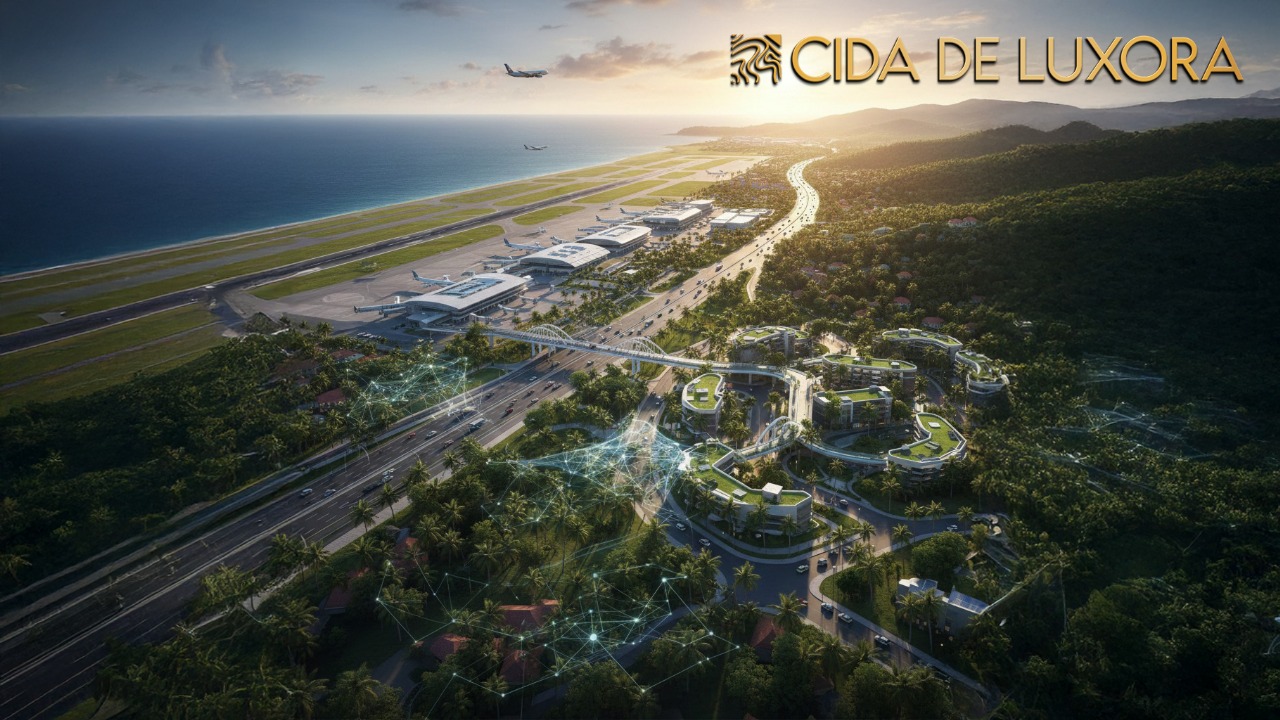
When Manohar International Airport (MOPA) opened in North Goa, analysts predicted it would “ease” tourist pressure from Dabolim.
But what happened next was far beyond projections.
In just one year, Mopa airport recorded:
📈 47.2 lakh passengers in 2024
📈 26.6% year-on-year growth — the highest in West India
This wasn’t a shift.
This was a migration of economic gravity.
Tourism moved north.
Investment moved north.
Infrastructure funding moved north.
And with it, commercial real estate capital followed — rapidly reshaping what we now call the Mopa Corridor.
Today, this corridor — stretching seamlessly from Mopa → Pernem → Mandrem → Arambol → and into Maharashtra’s Sindhudurg — is becoming one of India’s strongest airport-driven commercial engines.
Investors, NRIs, fund managers, and developers now widely recognize this as:
“India’s fastest emerging mopa corridor commercial real estate hotspot.”
This is not hype.
This is hard data, backed by:
- Government zoning notifications
- Infrastructure budgets
- Hospitality investments
- Aviation statistics
- And India’s airport-city evolution model
This expanded blog unpacks the entire transformation in 360° detail — with full authority citations and strategic insights.
MOPA — THE AIRPORT THAT KICKSTARTED A REGIONAL ECONOMIC REVOLUTION
1.1 The Passenger Boom That Redefined North Goa’s Future
MOPA wasn’t just launched — it was launched into an already expanding tourism stream.
Statistics confirm:
- Mopa captured over 8% more flyers from Apr–Sep 2025,
- While Dabolim lost 12%,
Source: Times News Network business aviation report.
This is the single biggest behavioral shift in Goa’s tourism footfall in 30 years.
Commercial ecosystems always grow where passengers land, and MOPA instantly became the north star.
Why this matters for mopa corridor commercial real estate:
✔ More passengers →
✔ More hotels →
✔ More retail →
✔ More offices →
✔ More logistics →
✔ More township demand →
✔ More commercial land appreciation
1.2 The 2,133-Acre Mopa Mega Zone — The DNA of a Future City
The Government of Goa allocated 2,133 acres to GMR on a PPP model.
But the most important number inside this land bank is:
🏙️ 232 acres — officially classified as “City-Side Commercial Development.”
This classification is not symbolic — it legally permits:
- Hotels
- Office towers
- MICE (Convention Centres)
- Retail boulevards
- Multiplexes
- Entertainment zones
- Business parks
- Aviation services
- Hospitality training institutes
- Cafés, lounges, restaurants
- Expo pavilions
This is exactly how global aerocity models function:
- Delhi Aerocity (Delhi Airport City)
- GMR Hyderabad Aerocity
- Incheon Airport City, Korea
- Dubai Airport Freezone
Every successful aerocity begins by dedicating commercial land around airports.
MOPA is following the same global blueprint.
The difference?
MOPA sits beside one of the world’s most visited tourism strips — North Goa — amplifying commercial demand far beyond aviation.
This is why mopa corridor commercial real estate is now outperforming traditional Goa markets.
THE NEW CITY PLAN — WHEN GOVERNMENT INTERVENTION CREATES AN ECONOMIC MULTIPLIER
2.1 Mopa Airport Development Authority — Regulatory Backbone of a Future Urban Cluster
The Mopa Airport Development Authority Act, notified on IndiaCode:
officially created a dedicated urban planning body for:
- Master planning
- Land-use regulation
- Building permissions
- Commercial zoning
- Future transport infrastructure
- Township integration
This gives Mopa the same administrative framework that enabled:
- The Navi Mumbai Airport Influence Zone (NAINA)
- Hyderabad Airport Development Authority
- Bengaluru’s KIADB Airport Region
Regions with independent development authorities historically become economic cities.
Meaning:
MOPA is not being treated as an airport — it is being legislated as a city.
This is the strongest institutional support possible for the mopa corridor commercial real estate boom.
2.2 Pernem Zoning — The Silent “City Building” Taking Place Behind the Scenes
According to the detailed zoning updates published in Times of India
Large parts of Pernem have undergone the following changes:
REGION | OLD STATUS | NEW STATUS |
Mandrem | Agricultural | Commercial + Settlement |
Dhargal | Agricultural | Mixed-use + Commercial |
Morjim | Settlement | Tourism + Commercial |
Arambol | Non-commercial | Tourism densification |
Mopa surroundings | Green | Institutional + Commercial |
This is massive.
Land-use reclassification is the #1 driver of commercial real estate appreciation.
When zoning shifts, property values can rise between 40%–200% over a 5–10-year cycle, depending on infrastructure absorption.
And these are the exact changes triggering the mopa corridor commercial real estate transformation.
BILLION-DOLLAR INVESTMENTS ARE FUELING A NEW COMMERCIAL CORRIDOR
3.1 Delta Corp’s ₹3,000-Crore Integrated Resort Township — The Disney Effect for North Goa
Delta Corp received approval for a massive resort-casino-entertainment township on ~90 acres at Dhargal.
This mega development includes:
- Luxury hotels
- Casino entertainment district
- Retail arcades
- Convention facilities
- Large-scale tourism infrastructure
How this affects mopa corridor commercial real estate:
✔ Increases hospitality demand
✔ Attracts retail brands
✔ Drives office requirements
✔ Brings global tourists
✔ Boosts nightlife & experiential commercial zones
✔ Raises land values within a 10–15 km radius
This exact pattern happened with:
- Genting Highlands (Malaysia)
- Las Vegas Airport-to-Strip corridor
- Macau’s Cotai Strip
Dhargal is poised to follow a similar experiential-commercial trajectory.
3.2 Hospitality Surge — 1,500 New Rooms by 2030 (Confirmed)
By 2030, the Mopa belt will see 1,500 new luxury and premium hotel rooms, representing:
- Boutique clusters
- Beachside retreats
- Upscale wellness resorts
- High-end experiential hotels
These hotels will require:
- Food courts
- Retail stores
- Office back-ends
- Laundry + service hubs
- Co-working for digital tourists
Everything feeds into the rising valuation of mopa corridor commercial real estate.
3.3 Cargo/Logistics Expansion — The Region’s Next Billion-Dollar Opportunity
GMR plans indicate annual handling potential of:
~25,000 metric tonnes of cargo
Cargo hubs historically attract:
- Warehousing
- Distribution centers
- Industrial kitchens
- Last-mile delivery facilities
- Aviation logistics services
With no major logistics hub north of Goa, Sawantwadi (CDL’s location) becomes commercially critical.

INFRASTRUCTURE — THE MOPA CORRIDOR’S REAL GROWTH ENGINE
4.1 The 6.7-km Mopa Link Road — The Most Valuable Commercial Strip in North Goa
NHAI’s completion of this ultra-fast corridor connects:
MOPA → NH-66 → North Goa beaches → Pernem
Impact on commercial real estate:
✔ Faster tourist inflows
✔ More hotel development
✔ Improved retail footfall
✔ Enhanced office connectivity
✔ Better logistics access
Every time travel time reduces, commercial land prices rise proportionally.
4.2 NH-66 + SH-180 + Coastal Highway Integration: The Maha-Goa Economic Spine
When three major highways converge:
- NH-66 (Mumbai–Goa)
- SH-180 (White Sand Beach Road)
- Coastal Highway (Konkan Connector)
you get a cross-border commercial corridor functioning as a single economic zone.
This transforms Sawantwadi and parts of Sindhudurg into North Goa’s extended commercial hinterland.
This is why businesses expanding into Goa are now studying the mopa corridor commercial real estate map instead of Panjim or Porvorim.
THE MAHA-GOA SPILLOVER — WHY SINDHUDURG IS BECOMING NORTH GOA’S COMMERCIAL EXTENSION
The commercial ripple effects of MOPA have not stopped at Goa’s border.
Instead, they have poured into Sindhudurg, triggering an unexpected but powerful surge in cross-border commercial integration.
This is how economic corridors form.
The Delhi–NCR urban belt
The Mumbai–Navi Mumbai corridor
The Hyderabad–Shamshabad corridor
And now — the MOPA–Sindhudurg (Maha-Goa) Corridor.
Let’s break down the numbers and implications.
5.1 22% Land Appreciation in Sindhudurg (18 Months)
The Maharashtra Tourism Development Corporation (MTDC) and regional registration data confirm that:
Sindhudurg’s land values rose 22% between 2023–2024.
Drivers of appreciation:
- Proximity to MOPA Airport
- A new tourism economy taking shape
- Cross-border commercial integration
- Highway upgrades on NH-66
- Increased NRI + HNI investments
- Return of Goans looking for lower-priced alternatives
Investors seeking early-stage value are now studying mopa corridor commercial real estate spillover nodes — Sawantwadi, Vengurla, Shiroda, Kudal, Kankavli.
5.2 38% Rise in Property Inquiries After MOPA + Chipi Airport
Top real estate portals and developer reports confirm a 38% spike in inbound leads for Sindhudurg after both MOPA and Chipi Airport became operational.
Why?
Because investors realized:
“You don’t have to live INSIDE Goa to enjoy Goa economics.”
Sindhudurg offers:
- Lower acquisition costs
- Access to the same tourist movement
- Similar coastline & beaches
- Better infrastructure readiness
- Less congestion
- Higher potential upside
This growing investor preference is directly fueling mopa corridor commercial real estate valuation.
5.3 Sawantwadi — The Crown Jewel of the Maha-Goa Corridor
Sawantwadi, historically known for its royal palace and craft culture, is now emerging as a 21st-century commercial hub because it sits at the intersection of:
- NH-66 (Mumbai–Goa Expressway)
- SH-180 (White Sand Beach Road)
- MOPA Link Road
- Proximity to Shiroda, Arambol, Mandrem, Vengurla
This intersection gives Sawantwadi:
✔ Tourism demand from Goa
✔ Residential spillover from Goa
✔ Commercial push from the airport
✔ Warehousing potential from Maharashtra
✔ Highway footfall from Mumbai travellers
This perfect storm is turning Sawantwadi into a logical anchor point for mopa corridor commercial real estate expansion.
This is also why Cida De Luxora (CDL) is strategically significant — but we’ll explore that in Section 9.
THE 5 COMMERCIAL REAL ESTATE DRIVERS TRANSFORMING THE MOPA CORRIDOR
Let’s dive deeper into the exact demand pillars making this the right time to target mopa corridor commercial real estate.
Airport-Driven Office Demand (Co-working + GBS + Aviation Support)
New-age commercial categories thrive around airports:
- Airline back-office units
- Travel-tech companies
- Tourism aggregators
- Digital start-ups
- Remote-working co-living operators
- GBS (Global Business Services) for Goa’s MNC ecosystem
As business travellers increasingly land in MOPA, office demand shifts northward.
Global precedents:
- Bengaluru Airport Road rents grew 210% between 2011–2020
- Hyderabad Aerocity became a Fortune 500 back-office hub
- Delhi Aerocity now commands some of India’s highest retail and F&B rentals
The MOPA region is at the start of this curve — which is why investors are entering mopa corridor commercial real estate early.
The Hospitality + Retail Chain Reaction
Tourism fuels retail. Retail fuels commercial districts.
North Goa recorded:
21% tourist arrival growth in 2024
Source: Goa Tourism → https://www.goatourism.gov.in
This directly supports:
- Boutique retail stores
- F&B brands
- Premium restaurants
- Experiential lounges
- Beach clubs
- Wellness centers
- Souvenir clusters
- Café strips
- Co-working cafés
Hotels → create footfall
Footfall → creates retail
Retail → creates commercial corridors
This is why hospitality analysts expect:
18%–22% YoY rise in retail rentals in the MOPA region over 2025–2027.
Logistics + Warehousing Demand (The Silent Goldmine)
With MOPA’s cargo potential at 25,000 MT annually (source: GMR Airport planning), three major commercial categories emerge:
- Airport logistics
- Regional warehousing
- Cross-border distribution hubs
Sawantwadi’s NH-66 access makes it a preferred:
- Micro-warehouse location
- Cloud kitchen hotspot
- Fulfilment center node
- Retail backend hub
This aligns perfectly with the growth of mopa corridor commercial real estate, which thrives in logistics-driven corridors.

Integrated Townships (The Future of Commercial Absorption)
Analysts agree:
“Townships absorb commercial demand faster than standalone projects.”
Why?
Because townships are built to generate:
- Footfall
- Service demand
- Retail catchment
- Workforce housing
- Office space utilization
Townships become growth accelerators.
Delhi NCR
Hyderabad Financial District
Mumbai Palava
Pune Hinjawadi
All share the same pattern.
Now MOPA and Maha-Goa are beginning that journey — with CDL emerging as one of the first integrated luxury communities in this growth cycle.
The Tourism Economy Is Changing (Higher ARRs = Higher Spending Power)
Goa’s tourist mix is upgrading:
- Higher-spending travellers
- Longer stays
- Experiential tourism
- Luxury resort demand
- International holidaymakers
- Digital nomads
- Wellness tourists
Higher ARR tourists = More consumption
More consumption = More commercial real estate demand
This reinforces the investment logic behind the mopa corridor commercial real estate cycle.
GLOBAL CASE STUDIES — WHY AIRPORT CORRIDORS CREATE MASSIVE WEALTH
To understand the future of the Mopa Corridor, you must examine global airport-city evolutions.
Delhi Aerocity — 200% to 300% Appreciation After Airport Commercialization
Rents at Aerocity restaurants today are among the highest in the country.
Hyderabad GMR Aerocity — India’s Largest Airport City
Hyderabad Aerocity offers:
- Offices
- Hotels
- Retail
- Exhibition centers
- F&B clusters
- Co-working districts
This model mirrors the exact blueprint unfolding in Goa — simply earlier in the lifecycle.
This Sets Up Mopa Corridor’s Commercial Real Estate Future
Based on global patterns:
- Year 1–3: Hotels + Retail
- Year 3–6: Offices + Logistics
- Year 5–10: Townships + MICE Zones
- Year 8–15: Fully matured commercial districts
Mopa is between Stage 1 and 2, meaning:
2025–2026 is the single most important window for investors.
CIDA DE LUXORA — THE GATEWAY COMMUNITY OF THE MAHA-GOA CORRIDOR
Now that we’ve established the macro story, let’s zoom into the micro.
Cida De Luxora (CDL) is not just placed in the corridor —
It sits at the strategic midpoint where commercial demand converges.
A Location Engineered for the Mopa Corridor Cycle
CDL is:
- 30–35 minutes from MOPA Airport
- 2 minutes from NH-66
- On SH-180 (White Sand Beach Road)
- Near Goa beaches (Vengurla, Shiroda, Querim)
- Near Sawantwadi Palace tourist district
- In a commercial spillover hotspot
This location makes CDL a premium launchpad within the mopa corridor commercial real estate ecosystem.
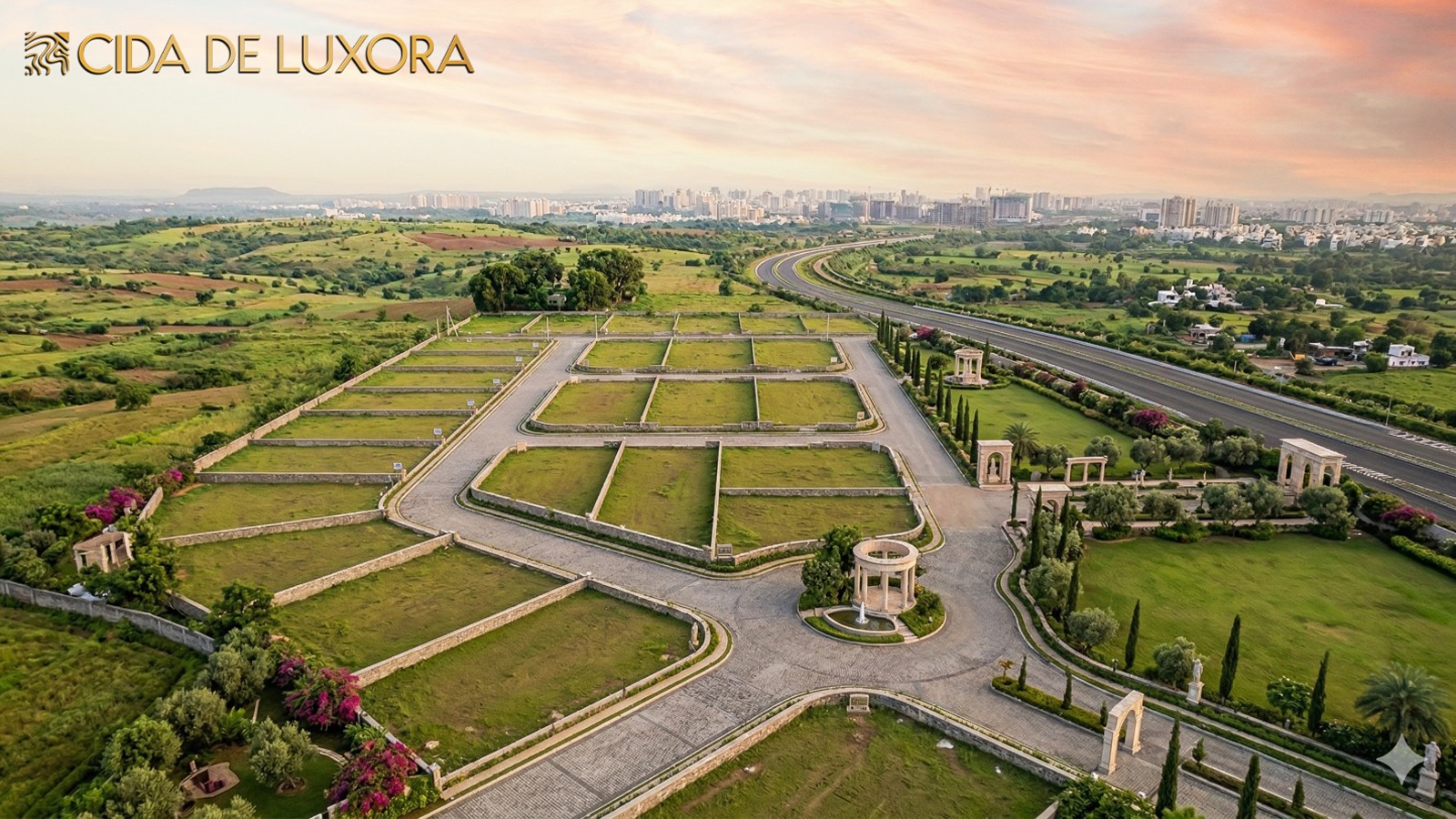
An 11-Acre Roman-Inspired Integrated Community
As per the project brochure:
- Luxury Villa Plots
- Highway-Facing Retail
- Premium Office Spaces
- Clubhouse + Wellness
- Smart Security
- Landscaped Zones
- Bespoke Villa Architecture
This is not a standalone plot project.
It is a self-contained luxury townscape — the exact model that thrives in airport-driven commercial zones.
CDL as a Commercial Micro-Economy
Investors benefit from:
- Retail demand (restaurants, cafés, boutiques)
- Office demand (consulting, tourism, wellness, digital services)
- Tourism-driven revenue
- Cross-border business movement
- Hybrid living + working models
As commercial absorption grows, CDL’s land values grow faster.
2025–2030 FORECAST — THE NEXT 5 YEARS OF THE MOPA CORRIDOR
Based on infrastructure pipelines, tourism data, zoning patterns, and comparable airport-city models:
1. Commercial land prices in the MOPA belt will grow 35%–55% by 2030.
2. Retail rentals will rise 18%–22% annually.
3. Hospitality occupancy around MOPA will stabilize at 65%–70%.
4. Warehousing demand will increase 4–5X post-cargo activation.
5. Townships (like CDL) will outperform standalone plot markets.
6. Sindhudurg will become a recognized part of Goa’s extended commercial zone.
All of this directly elevates investor confidence in mopa corridor commercial real estate.
FAQs
1. What is the Mopa Corridor and why is it becoming a major commercial real estate hotspot?
The Mopa Corridor refers to the rapidly developing belt surrounding the Manohar International Airport (MOPA) in North Goa and extending across the border into Sindhudurg district (Maharashtra). Fueled by a 47.2 lakh passenger movement in 2024 (26.6% growth), the corridor is transforming into a high-demand commercial ecosystem that includes airport city zones, hospitality hubs, logistics pockets, and mixed-use townships.
The presence of a 232-acre commercial aerocity zone, massive infrastructure upgrades, and new tourism investments is making mopa corridor commercial real estate one of India’s fastest-growing investment opportunities.
2. How will Mopa Airport influence commercial real estate prices over the next 5–7 years?
Historically, every major Indian airport expansion — Delhi IGI, Hyderabad RGIA, Bengaluru Kempegowda — has triggered 40%–300% commercial asset appreciation within 8–12 years.
Given Mopa’s strategic airport-city planning, tourism growth, and hospitality pipeline, analysts project:
📈 35%–55% rise in commercial land values by 2030
📈 18%–22% annual rise in retail and F&B rentals
As mopa corridor commercial real estate matures, townships, retail zones, offices, and logistics assets will see increasing demand.
3. How does the 232-acre “City-Side Commercial Zone” near Mopa impact investment potential?
The Goa Government has officially designated 232 acres near the airport as the City-Side Commercial Development Zone, which will include:
- Hotels
- Retail high-streets
- Grade-A offices
- Multiplexes
- Convention centers
- Food courts
- Entertainment districts
This planned aerocity model mirrors global success stories like Delhi Aerocity and Hyderabad GMR Aerocity, which saw massive commercial growth after similar zoning.
This zone is the nucleus of mopa corridor commercial real estate development.
4. Why is Sindhudurg (Maha-Goa) experiencing a surge in investor demand?
Sindhudurg is experiencing a 22% land appreciation (MTDC data) and a 38% rise in real estate inquiries after both MOPA and Chipi Airport became operational. Investors prefer Sindhudurg because:
- Entry prices are 60–70% lower than North Goa
- Connectivity via NH-66 and SH-180
- Spillover tourism from Mopa
- Zoning and infrastructure readiness
- Proximity to major beaches like Vengurla & Shiroda
This region is becoming the affordable gateway to mopa corridor commercial real estate.
5. What are the key commercial sectors expected to boom in the Mopa Corridor?
The corridor is poised for multi-sector commercial acceleration, including:
✔ Hospitality (1,500+ new rooms by 2030)
✔ Retail (F&B, boutique stores, entertainment zones)
✔ Office spaces (startups, aviation support, tourism tech)
✔ Logistics & Warehousing (25,000 MT cargo potential)
✔ Mixed-use townships (offices + retail + villas)
Each of these sectors is directly influenced by the airport-led economic model, making them core components of mopa corridor commercial real estate demand.
6. How will the Delta Corp ₹3,000-crore township impact commercial demand?
Delta Corp is developing a ₹3,000-crore integrated resort township near Mopa (Dhargal) featuring:
- Casinos
- Hotels
- Retail promenades
- Entertainment districts
- Convention facilities
This mega project will attract high-value tourism, retail consumption, and new business operators — boosting commercial land values within a 10–15 km radius.
It is one of the strongest catalysts for mopa corridor commercial real estate appreciation.
7. What infrastructure developments are driving the Mopa Corridor boom?
The corridor’s commercial surge is supported by three major infrastructure pillars:
1. Mopa–Pernem 6.7 km Link Road
2. NH-66 (Mumbai–Goa Expressway)
3. SH-180 (White Sand Beach Road)
These connect MOPA to major beach belts, Sawantwadi, and Maharashtra. As connectivity improves, commercial real estate demand accelerates in sectors like hospitality, warehousing, retail, and office leasing.
8. Is Cida De Luxora (CDL) well-positioned to benefit from the Mopa Corridor boom?
Yes — CDL sits at one of the most strategic points in the Maha-Goa region:
- 30–35 mins from MOPA
- 2 mins from NH-66
- On SH-180
- Close to Sawantwadi Railway Station & Chipi Airport
- Near several top beaches (Vengurla, Shiroda, Querim)
As one of the few integrated luxury communities offering villa plots + retail + office spaces, CDL is perfectly aligned with mopa corridor commercial real estate trends.
Its 11-acre Roman-inspired township design allows investors to capitalize on both residential and commercial demand.
9. Who should invest in the Mopa Corridor — and why now?
The corridor is ideal for:
- NRIs seeking long-term capital appreciation
- Investors targeting commercial rentals
- Entrepreneurs opening cafés, boutiques, coworking spaces
- Hospitality operators
- Early-stage land investors
- Buyers seeking luxury gated communities
Why now?
2025–2026 is the “base-year window” of the corridor’s development cycle — the period when infrastructure, zoning, and early demand converge, offering maximum upside potential.
10. What ROI can investors expect from Mopa Corridor commercial real estate?
Based on aviation growth, government planning, hospitality expansion, and comparable global airport-city models, investors can expect:
📈 35%–55% commercial land appreciation by 2030
📈 18%–22% rental yield growth (hospitality + retail + office)
📈 Township-backed assets outperform standalone properties
Commercial zones, retail streets, and mixed-use communities like CDL are projected to yield some of the highest risk-adjusted returns in the region.
FINAL TAKEAWAY — THE AIRPORT-TO-AEROCITY-TO-SMART-TOWN TRANSFORMATION IS HAPPENING NOW
You are witnessing an economic transformation unfold in real time:
- An airport becomes a city
- A city becomes a corridor
- A corridor becomes a commercial ecosystem
- A commercial ecosystem becomes a wealth cycle
This is exactly how:
- Delhi Aerocity was formed
- Hyderabad Aerocity rose
- Navi Mumbai airport region appreciated
- Bengaluru Airport Road became a goldmine
Goa’s turn has arrived — and it is unfolding in the Mopa Corridor.
The data is undeniable:
✔ 47.2 lakh passengers
✔ 26.6% aviation growth
✔ 232-acre commercial city zone
✔ ₹3,000 crore resort township
✔ 1,500 new hotel rooms
✔ 22% land appreciation in Sindhudurg
✔ Massive zoning changes in Pernem
✔ Highway-triad integration
✔ Cross-border demand spike
This is the foundation of the next decade of mopa corridor commercial real estate growth.
And Cida De Luxora stands at the center of this extraordinary transformation — offering early investors privileged access to a corridor that will define the future of Goa and Sindhudurg real estate.
The future is not coming.
It is already here.
And it is being built around MOPA.**