The North Goa Turning Point: A Deep Dive into the MOPA Airport Real Estate Impact
Stand on a quiet North Goa hillside at sunset and the story tells itself. Where once only coconut groves and sleepy village roads stretched to the horizon, you now see smooth highways, new signboards, resort hoardings in English and Russian, and headlights tracing routes to a new kind of Goa. Flights land through the night. Taxis run without pause. And investors, quietly, are buying land, villas, and plots along a corridor that simply didn’t exist a few years ago.
At the center of this story is one infrastructure catalyst: Manohar International Airport (MOPA) in North Goa.
This is not just another airport. It is a structural force changing tourism flows, investment patterns, and long-term land values. In this blog, we’ll unpack the mopa airport real estate impact with hard numbers, government-backed data, and on-ground trends — and show why 2025 is a pivotal year for anyone thinking about North Goa or the broader Goa–Sindhudurg belt.
MOPA in Numbers: How a New Airport Rewired Goa’s Air Traffic
When MOPA began operations in early 2023, many assumed it would simply split traffic with Dabolim Airport. The reality has been far more powerful: it has expanded the air-arrival pie, especially for North Goa.
According to a 2025 update based on official data, Manohar International Airport handled 47.2 lakh passengers in 2024, a 26.6% increase over 2023. Domestic travellers rose from 36.7 lakh to 44.7 lakh, while international passengers jumped from just 50,000 in 2023 to 2.5 lakh in 2024.
This isn’t marginal growth — it’s exponential scaling from a brand-new asset:
- Total passengers (2024): 47.2 lakh
- Passenger growth: 26.6% year-on-year
- Domestic traffic: 36.7 → 44.7 lakh
- International traffic: 0.5 → 2.5 lakh (5x growth)
At the same time, aircraft movements increased by over 22%, signalling not just one-off peaks but higher, sustained utilization of this North Goa gateway.
For any serious investor trying to quantify the mopa airport real estate impact, this is the starting point:
A new airport that didn’t just divert flights from Dabolim, but created fresh demand and made North Goa the primary entry point for a massive share of tourists.
Tourism Surge: Demand That Powers the Property Cycle
Airports are only as meaningful as the travellers they bring. Here too, numbers are loud and clear.
The Goa Tourism Department’s provisional data for 2024 shows:
- Domestic tourists: 99,41,285
- International tourists: 4,67,911
- Total visitors: 1,04,09,196 — that’s over 10.4 million tourists.
This represents roughly 21% growth in total tourism compared to the previous year.
Even more telling:
- During the last week of December 2024, Goa handled around 200 flights daily, a large share of them through MOPA, with record tourist inflows in the peak festive period.
In other words, while parts of Asia were still struggling to reclaim tourism volumes post-COVID, Goa was breaking its own records — with North Goa increasingly becoming the preferred entry and stay zone thanks to MOPA’s location.
That’s the second layer of the mopa airport real estate impact:
Not just more flights, but more high-intent, high-spend travellers concentrating in North Goa and nearby belts.
From Runway to Real Estate: How MOPA’s Growth Is Showing Up in Property Prices
So how has all this translated into actual real estate value?
Recent evidence-led analyses by market observers and consultants indicate that land and property values in micro-markets influenced by MOPA are rising at roughly 20–30% annually, especially in areas with good road connectivity and clean titles.
Hot spots include:
- Pernem – the broader taluka where MOPA is located
- Mandrem–Morjim–Ashwem – the new “quiet luxury” belt of North Goa
- Parts of Bardez and connected hinterlands with highway access
One detailed strategist review notes that MOPA has effectively shortened access to North Goa’s premium belts and, combined with new roads, created a multi-node appreciation corridor rather than a single “airport bubble.”
Along this corridor:
- Plots in the right zones have seen double-digit annual appreciation
- Holiday villas have become a serious asset class, rather than a lifestyle indulgence
- Rental yields for well-located villas and holiday homes are now commonly reported in the 4–7% annual range, with higher upside in peak seasons
This is the heart of the mopa airport real estate impact for 2025:
Property is no longer valued simply by “beachfront distance,” but by airport access, highway linkages, and yield potential in a year-round demand market.
The Infrastructure Web: Why MOPA’s Impact Is Structural, Not Hype
Airports alone don’t lift land values sustainably. Airports plus hard infrastructure do.
The MOPA story is reinforced by a connected web of projects:
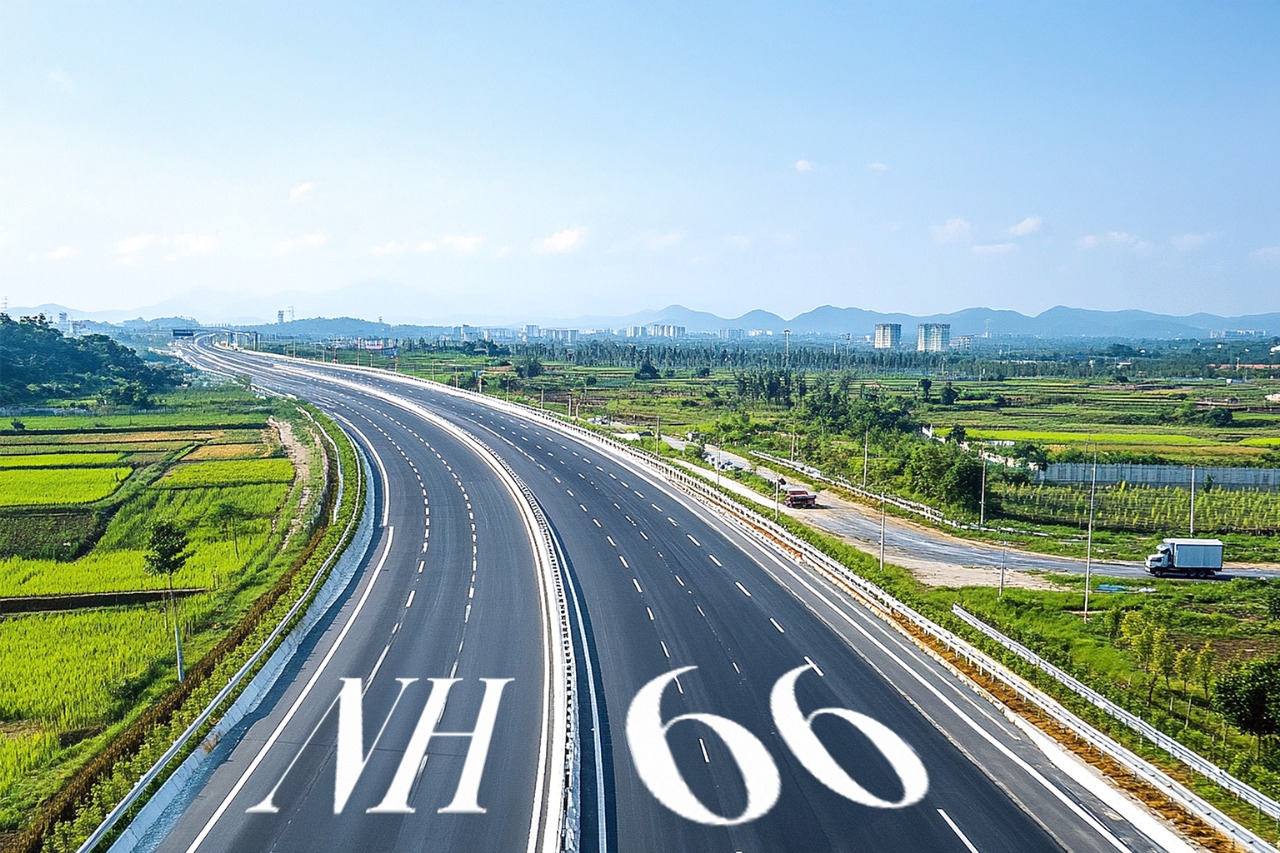
NH-66: The Konkan Spine Being Upgraded
National Highway-66, which runs along India’s west coast and passes through Goa and into Maharashtra’s Sindhudurg district, is in the midst of a major transformation. The Union government has sanctioned ₹1,376 crore for four-laning a key stretch of NH-66 in Goa, with upgrades aimed at reducing congestion, improving safety and enabling smoother long-distance traffic.
Sections near Goa are being widened, re-engineered and supplemented with service roads and elevated corridors, including the Porvorim Six-Lane Elevated Corridor, which is targeted for completion by December 2025 and has already achieved around 50% physical progress.
For the mopa airport real estate impact, NH-66 is a crucial multiplier:
- It connects Mumbai–Konkan–Goa–Sindhudurg
- It allows travellers and investors from Mumbai/Thane/Pune to drive down in 6–8 hours once upgrades are fully complete
- It lowers friction for second-home usage and weekend vacations
NH-166S and Link Roads to MOPA
Special link roads like NH-166S now connect MOPA directly to NH-66, ensuring airport-to-highway movement is quick and seamless. This reduces travel times to North Goa’s coastal and hinterland belts significantly and makes land near these nodes far more attractive.
Bridges and Internal Connectivity
With the commissioning of critical bridges (including the New Zuari Bridge) and steady upgrades of arterial roads, Goa’s internal drive times are compressing. North Goa and neighbouring Maharashtra districts can now be navigated more efficiently, amplifying the corridor effect stemming from MOPA.
All of this reinforces one truth:
The mopa airport real estate impact sits on top of a multi-layer infrastructure grid — not a single airport runway.

Who Is Driving Demand? The New Investor & Traveller Profiles
The people using MOPA are not just weekend tourists. They are, increasingly, the exact audiences who shape property demand:
Work-From-Anywhere Professionals
Post-pandemic, Goa became a natural hub for remote working. Now, with MOPA in the north and strong broadband penetration, WFH and WFA (work-from-anywhere) professionals from metros like Mumbai, Bengaluru, Pune and Delhi are choosing longer stays in North Goa and nearby areas.
They want:
- Well-connected locations near good roads
- Safe, gated, villa-style communities
- Reasonably accessible from the airport for frequent in-and-out travel
This is classic fuel for mid-term rental markets and plotted community demand, deepening the mopa airport real estate impact beyond tourism.
NRIs and Global Indians
NRIs who earlier gravitated to South Goa’s resorts are increasingly looking at North Goa and even into the Maharashtra side of the Maha–Goa belt. For them, MOPA:
- Cuts airport transfer times
- Makes weekend and short vacation trips viable
- Enhances the eventual resale pool for their assets
A clean-titled villa plot or a ready villa within an hour of the airport becomes a fungible global asset: easy to rent, easy to exit, easy to access.
Hospitality & Wellness Developers
Boutique hospitality brands, wellness retreats, Ayurveda and eco-resort operators are scanning the North Goa–Sindhudurg corridor for land. They recognise that the mopa airport real estate impact is not limited to homes; it includes:
- Small resorts and farm-stays
- Branded retreats
- Hybrid models (wellness + villas + stays)
Their presence tends to anchor values and create local employment, reinforcing appreciation over time.
Why the Impact Spills Beyond Goa: The Maha–Goa & Sindhudurg Effect
Zoom out from the state map and a bigger pattern appears. The benefits of MOPA do not stop at Goa’s border.
Sindhudurg: The “Peaceful Twin” Emerging
The coastal district of Sindhudurg in Maharashtra, immediately north of Goa, is quietly repositioning itself as a “cleaner, quieter, more investible twin” to Goa’s established coastal markets. Independent developer and brokerage reports from late 2024 show that:
- Land values in parts of Sindhudurg (including Vengurla, Kudal and adjoining belts) have grown at 20–25% annually since the operationalisation of Chipi Airport and the strengthening of NH-66.
With MOPA on one side and Chipi on the other, this region essentially becomes a two-airport coastal corridor, stitched together by NH-66 and state highways. For investors, that significantly strengthens the mopa airport real estate impact, because:
- A property located strategically along NH-66 or SH connectors can serve both Goa and Sindhudurg tourism flows
- Weekend drive-in traffic from Mumbai–Pune, plus flight-in traffic via MOPA and Chipi, support rental and resale demand
The Maha–Goa Belt as a Unified Investment Story
Infra-focused analyses are now increasingly referring to a Maha–Goa belt rather than treating Goa and Sindhudurg as separate silos. MOPA is a core anchor in that narrative, especially for the northern half.
This allows investors to play a wider, multi-node strategy:
- Villa plots near white-sand beaches
- Gated communities near junctions of NH-66 and state highways
- Mixed-use projects (villas + retail + offices) near growth junctions
Instead of betting on a single village or beach, they can ride the entire corridor effect of the mopa airport real estate impact plus parallel developments around Chipi.
Corridors, Not Pin-Drops: How to Read the Map Like a Pro
One of the biggest mistakes retail investors make is thinking in pin-drops (“near airport”) rather than corridors (“airport + highway + resort + zoning + social infrastructure”).
To truly leverage the mopa airport real estate impact, you want to look for:
- Airport Proximity with Real Road Access
Not just “as the crow flies” but actual drive time via NH-66, NH-166S, SH-180 or equivalent connectors. - Zoning & Title Clarity
Non-agricultural status, clear titles, RERA-aligned where applicable — especially important on the Maharashtra side and in village belts. - Tourism or Lifestyle Anchor Nearby
Beaches, lakes, forts, wildlife trails, or scenic backwaters that reinforce the location’s natural appeal. - Clustered Development
Gated communities, villa projects, or hospitality clusters that ensure you’re not isolated; the corridor thrives when multiple projects build synergy over time. - Connectivity to Daily Needs
Access to hospitals, schools, and retail ensures that what begins as a holiday-home market eventually matures into a robust second-home and even permanent-stay market.
When these elements align, the mopa airport real estate impact tends to be durable, not speculative.
Numbers vs Narratives: Is This a Bubble or a Base?
Whenever growth is fast, the “bubble” question appears — and it’s a healthy instinct.
Here’s how the current situation looks when you weigh fundamentals:
- Passenger and tourism growth is evidenced by hard government data, not just optimistic projections.
- Infrastructure spends (NH-66, NH-166S, elevated corridors) are backed by sanctioned budgets and under-execution contracts.
- Real-estate uptick shows up not only in developer claims but in multi-source market analyses and brokerage reports.
Could individual micro-pockets overheat? Absolutely. There will always be overpriced listings and hype-driven assets. But at a corridor level, the mopa airport real estate impact is anchored in:
- Structural air-traffic growth
- Diversified tourist profiles
- Year-round connectivity
- Dual-airport dynamics (with Chipi in the picture too)
- Tangible government infrastructure investments
For a long-term investor with a 7–10 year horizon, that’s closer to a base than a bubble — provided they buy right.
What to Buy (and What to Avoid) in the MOPA Corridor
To translate all of this into a practical playbook, here’s how a seasoned investor might approach the mopa airport real estate impact:
Smart Opportunities
- Plotted Developments Near Highways
Legally clear plots with internal infrastructure (roads, drainage, clubhouses, security) a few minutes off NH-66 or major SHs, and within 30–45 minutes of MOPA. - Villa Plots with Resort-Grade Amenities
Where you can either build a custom villa for personal use or lease it as a managed holiday home. - Mixed-Use Gated Communities
Projects combining luxury villas, retail fronts, and office/clinic spaces capture both lifestyle and rental potential. - Assets with Dual Demand Streams
Locations attractive both as second homes and holiday rentals — typically near popular beaches, lakes, or cultural/tourist nodes.
Assets to Treat with Caution
- Unzoned, Disputed, or Purely Agricultural Land
Even if cheap today, legal uncertainty can block appreciation and resale. - Projects With No Clear Access Road
“Near airport” but on poor, interior roads is a red flag. Corridors matter more than crow-flight. - Pure Speculation in Overhyped Villages
Where prices have outrun fundamentals and there is no meaningful infrastructure or tourism anchor.
Smart capital respects the mopa airport real estate impact, but doesn’t suspend due diligence.
The Emotional Payoff: What This Means for Legacy and Lifestyle
Beyond numbers and graphs, real estate is ultimately about how a place makes you feel.
Imagine landing at MOPA on a Friday evening. Within 40 minutes, you’ve left the busy highway and turned into a quiet, tree-lined approach road. Security gates open to a community of villas with warm light spilling from balconies, families out for walks, and a clubhouse alive with clinking glasses and quiet laughter. In the distance, you hear the sea. On the drive in, you passed a hospital, a good school, and a row of high-street shops.
That’s not just a “holiday home” anymore. That’s a second life you can step into — easily, frequently, and eventually, permanently if you choose.
This is the deeper dimension of the mopa airport real estate impact:
- It converts what used to be a once-a-year vacation into a repeated, integrated lifestyle.
- It transforms remote hills and fields into curated, gated, livable communities.
- It upgrades land from being a static asset into a yield-bearing, emotionally satisfying, legacy investment.
For families, that could mean:
- A place where children grow up knowing the sea and hills, not just malls and flyovers
- An asset that can be passed on, rented, or liquidated in a strong market
- A hedge against urban stress, inflation, and uncertainty
The 2025–2030 Outlook: Reading the Next Chapter
So where does the story go from here?
Based on current projections, MOPA’s capacity and traffic are expected to keep expanding, with some estimates suggesting it may handle over 8 million passengers annually once subsequent phases and capacity expansions are in place.
Goa tourism, already having crossed 10.4 million visitors in 2024, is on track to deepen in quality, not just quantity — with more long-stay, high-spend tourists and global brands exploring the North Goa and adjoining Maha–Goa belt.
NH-66 and associated expressway links will continue to:
- Shorten Mumbai–Konkan–Goa–Sindhudurg travel times
- Make weekend and short-break usage of second homes more practical
- Support broader real-estate valuation along the corridor
If you knit these threads together, the next 5–10 years look like this:
- Corridors near MOPA and along NH-66 see steady, compounding appreciation, especially where zoning & titles are clean.
- Mixed-use and curated communities outperform isolated, unplanned pockets.
- Goa and Sindhudurg evolve from “holiday only” to “hybrid lifestyle + investment” belts.
The mopa airport real estate impact thus becomes a long arc, not a short-term spike.
FAQ
1. How has MOPA Airport impacted real estate demand in North Goa?
MOPA Airport has significantly increased real estate demand in North Goa by improving year-round connectivity, expanding tourism inflow, and reducing transit time from major Indian metros. The airport handled 47.2 lakh passengers in 2024, growing 26.6% YoY, according to recent aviation reports. This sharp increase in footfall has led to higher demand for villas, gated communities, and NA plots in North Goa, Mandrem, Ashwem, Siolim, and Pernem. Investors now prioritize locations within 35–45 minutes of the airport because they offer rental potential, resale liquidity, and long-term capital appreciation.
2. Is the real estate growth around MOPA Airport sustainable or temporary?
The growth is structurally sustainable. It is supported by three long-term factors:
Massive tourist growth (Goa crossed 10.4 million visitors in 2024)
NH-66 and NH-166S upgrades improving regional access
A two-airport model (MOPA + Dabolim) decongesting travel and encouraging more domestic and international arrivals
With planned expansions and rising demand for premium villas and mixed-use communities, the mopa airport real estate impact is expected to continue strengthening through 2025–2030.
3. Which areas are benefiting the most due to MOPA Airport?
The fastest-growing micro-markets influenced by MOPA include:
Pernem Taluka (closest to MOPA)
Mandrem, Morjim, and Ashwem (quiet luxury beach belts)
Siolim and Assagao (bohemian upscale residential hubs)
Sawantwadi & North Sindhudurg (emerging investment belt due to dual-airport access)
These zones have seen 20–30% annual appreciation, driven by demand for branded villas, gated villa plots, and second homes.
4. What kind of properties perform best near MOPA Airport?
Properties showing the strongest performance include:
Luxury villa plots with NA titles
Gated communities offering clubhouses, security, internal roads
Boutique villas and holiday homes with rental management services
Mixed-use developments with retail or offices along NH-66 and SH-180
These asset classes benefit from both mid-term rental yields and long-term capital growth.
5. Are rental yields higher in MOPA-influenced areas?
Yes. With increased tourist traffic and long-stay visitors (WFH/WFA professionals, NRIs, global travellers), rental yields in North Goa have grown to 4–7% annually, with peak-season returns significantly higher. Holiday villas near Ashwem, Mandrem, Siolim, and the MOPA–NH-66 belt perform especially well.
6. How does MOPA Airport compare to Dabolim Airport in terms of real estate impact?
Dabolim Airport traditionally boosted real estate in South and Central Goa. MOPA Airport, on the other hand, is unlocking newer, less saturated markets in North Goa and extending the growth corridor into Maharashtra’s Sindhudurg district. Because MOPA is a greenfield airport with future expansion capability and better road integration, its long-term real estate impact is expected to be stronger compared to Dabolim.
7. What infrastructure developments are supporting real estate growth around MOPA?
Key supporting infrastructure includes:
NH-66 four-laning & expansion (Mumbai–Sindhudurg–Goa highway)
NH-166S link roads connecting MOPA to key tourist belts
New Zuari Bridge & regional connectors improving pan-Goa mobility
Upgraded internal coastal and village roads enabling access to beaches, resorts, and second-home communities
These upgrades dramatically reduce travel time and increase the livability of the entire belt.
8. How does MOPA Airport affect real estate in Sindhudurg (Maharashtra)?
Sindhudurg — especially areas like Sawantwadi, Vengurla, Kudal, and Shiroda — is benefitting from both MOPA Airport and Chipi Airport. This dual-airport advantage is unique in India. Land prices in Sindhudurg have risen at 20–25% CAGR, driven by resort developers, villa investors, and buyers seeking cleaner, quieter destinations adjacent to Goa.
9. Is it better to invest near the airport or slightly away in well-connected corridors?
The best investments are not directly at the airport, but within 25–45 minutes along well-planned corridors such as NH-66, NH-166S, and SH-180. These zones offer the perfect mix:
Strong rental demand
Lower noise & congestion
Beautiful natural surroundings
Higher resale interest
Airport-proximal land tends to see mixed development and is better suited for logistics or commercial projects.
10. What should investors check before buying property near MOPA?
Key checks include:
Title clarity & NA status (especially in village belts)
RERA registration (where applicable)
Access via major roads, not interior lanes
Proximity to beaches, retail hubs, tourist circuits
Master-plan compliance and zoning
Developer credibility & legal compliance
Investors should also prioritize communities offering clubhouses, concierge services, gated security, and infrastructure, as these assets appreciate faster in airport-driven corridors.
How to Act on the MOPA Airport Real Estate Impact
If you strip out the noise, what remains is a simple, powerful picture:
- A new international airport in North Goa, growing passengers by over 26% in a year.
- Tourism at all-time highs, crossing 10.4 million visitors with 21% annual growth.
- Massive highway and corridor upgrades (NH-66, NH-166S, elevated routes) under implementation.
- Land and property values rising fastest in airport-linked, infra-rich micro-markets.
That is the mopa airport real estate impact in hard, verifiable terms.
For you as an investor, it comes down to three decisions:
- Will you participate in this corridor at all — or watch it from the outside?
- If you do, will you buy emotionally, or with a structured, data-backed map?
- Will you think in pin-drops, or in corridors that couple airports, highways, tourism and quality communities?
If you choose to participate with clarity, then North Goa and the broader Maha–Goa belt may not just be where you spend your holidays. It may be where you quietly, steadily, build your next decade of wealth.
And that is the real story behind the mopa airport real estate impact.