Goa–Sindhudurg Real Estate Boom 2026: Why Infrastructure-Led Corridors Are Emerging as India’s Smartest Long-Term Investment Choice
India’s real estate growth story is evolving. For decades, capital chased metros, then tier-1 suburbs, then saturated lifestyle hubs. But as pricing pressure, congestion, and regulatory tightening reshape established markets, investors are increasingly asking a different question:
Where does the next decade of sustainable, infrastructure-backed real estate growth come from?
That question has quietly brought attention to one of India’s most underestimated coastal corridors — the Goa–Sindhudurg belt. The Goa Sindhudurg real estate boom 2026 is not driven by speculation or overnight hype. Instead, it is the outcome of infrastructure execution, policy alignment, tourism economics, and land-scarcity fundamentals coming together at the right time.
This article is a deep, fact-based exploration of that transformation — explaining why the region is gaining attention, how infrastructure is reshaping land value, what risks investors must understand, and why timing matters more than trends.
Why Investors Are Looking Beyond Saturated Coastal Markets
Coastal real estate has always carried emotional and financial appeal. Lifestyle buyers, second-home seekers, hospitality operators, and long-term investors are drawn to coastlines because of limited supply and consistent demand. However, India’s most popular coastal markets are facing a structural shift.
In places like Goa, rising prices, congestion, development density, and regulatory pressure have reduced the margin for future upside. According to multiple real estate and tourism reports, land availability in prime coastal belts has tightened significantly, while development restrictions have increased costs and timelines.
This has triggered a search trend visible across platforms:
- “Next Goa real estate opportunity”
- “Emerging coastal investment corridors in India”
- “Infrastructure-led land investment in India”
This shift in search intent explains why the Goa Sindhudurg real estate boom 2026 has entered serious investor conversations. Instead of chasing fully priced destinations, capital is looking for regions where infrastructure is still unfolding, and demand curves are still rising.
Understanding the Goa–Sindhudurg Geography Advantage
Sindhudurg district sits along Maharashtra’s Konkan coast, directly adjoining North Goa. Historically, this proximity mattered little due to limited access and low visibility. Today, that has changed.
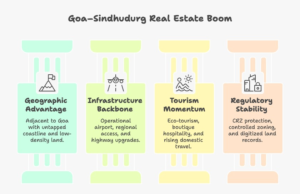
From an investor’s perspective, the Goa–Sindhudurg corridor offers three geographic advantages:
- Adjacent to an international tourism hub (Goa)
- Lower density and larger land parcels
- Untapped coastline with development controls
Geography alone does not create value. But when geography aligns with infrastructure and policy, value creation accelerates. This is exactly the foundation of the Goa Sindhudurg real estate boom 2026.
Infrastructure: The Core Driver of the Goa–Sindhudurg Real Estate Boom 2026
Every long-term real estate cycle is built on infrastructure. Roads, airports, railways, and digital connectivity do more than improve access — they redefine economic relevance.
Air Connectivity: A Game Changer
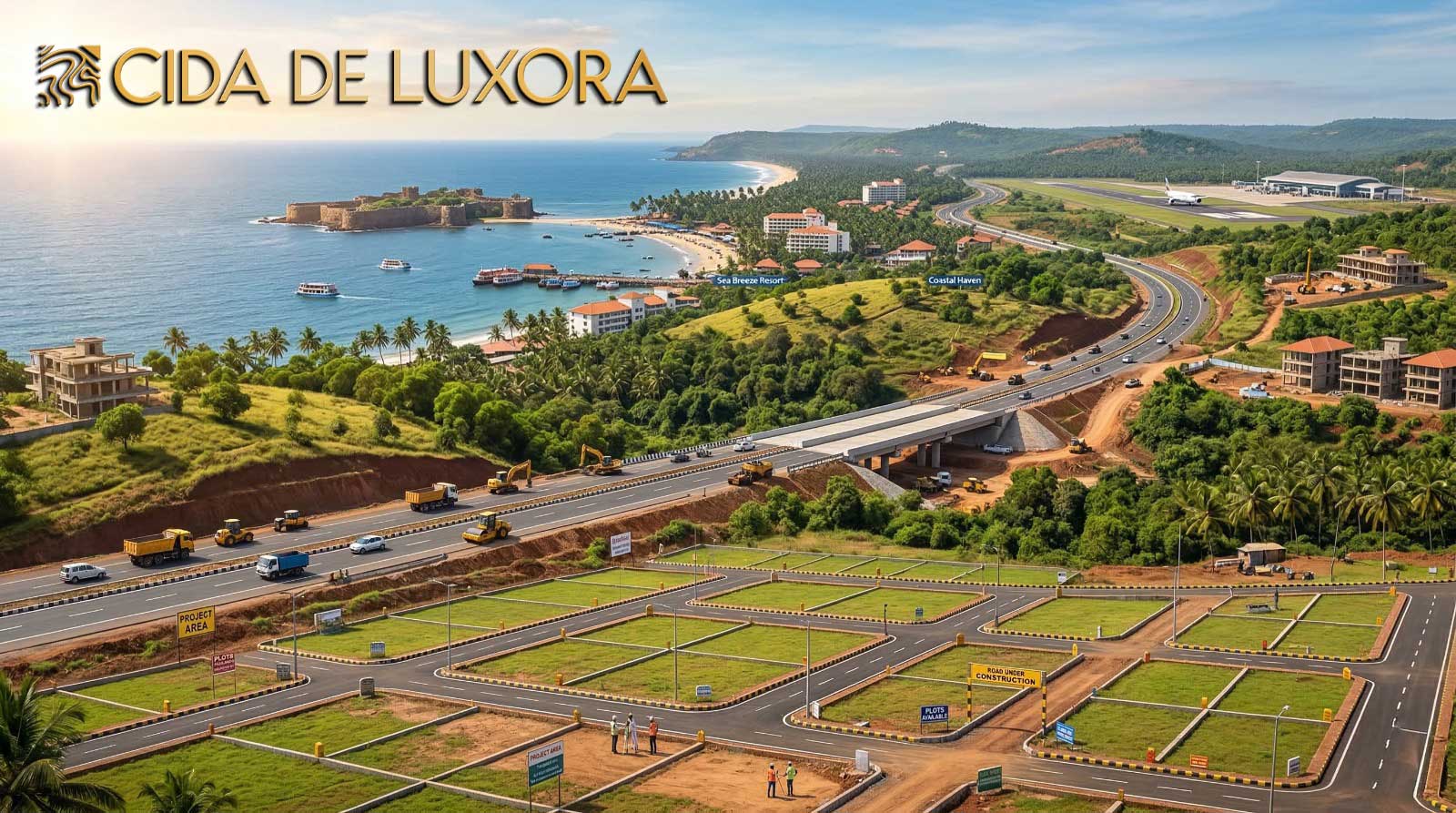
The operationalisation of Sindhudurg Airport (Chipi Airport) has fundamentally changed the region’s accessibility. What was once a 10–12-hour road journey from Mumbai has become a short domestic flight.
Source: Airports Authority of India
https://www.aai.aero/en/airports/sindhudurg
In parallel, the opening of Manohar International Airport (MOPA) in North Goa has further strengthened the corridor’s aviation ecosystem.
Together, these airports support both domestic tourism and future international inflows. For real estate, this means:
- Increased weekend tourism
- Higher hospitality viability
- Greater second-home demand
This aviation backbone is a major pillar of the Goa Sindhudurg real estate boom 2026.
Highway Infrastructure and Regional Connectivity
Road infrastructure has historically been the weakest link for Konkan growth. That narrative is changing rapidly.
The expansion and upgrade of National Highway 66 (NH-66 has significantly reduced travel friction between Mumbai, Goa, and Sindhudurg.
Additionally, Maharashtra’s proposed Shaktipeeth Expressway aims to connect interior economic zones directly to the Konkan coast.
Infrastructure economists consistently note that land values near major highways outperform isolated assets over time. This is why the Goa Sindhudurg real estate boom 2026 is increasingly viewed as infrastructure-led rather than tourism-led alone.
Tourism Economics and Its Impact on Land Demand
Tourism is not just about hotels — it creates a ripple effect across land markets, rentals, services, and employment.
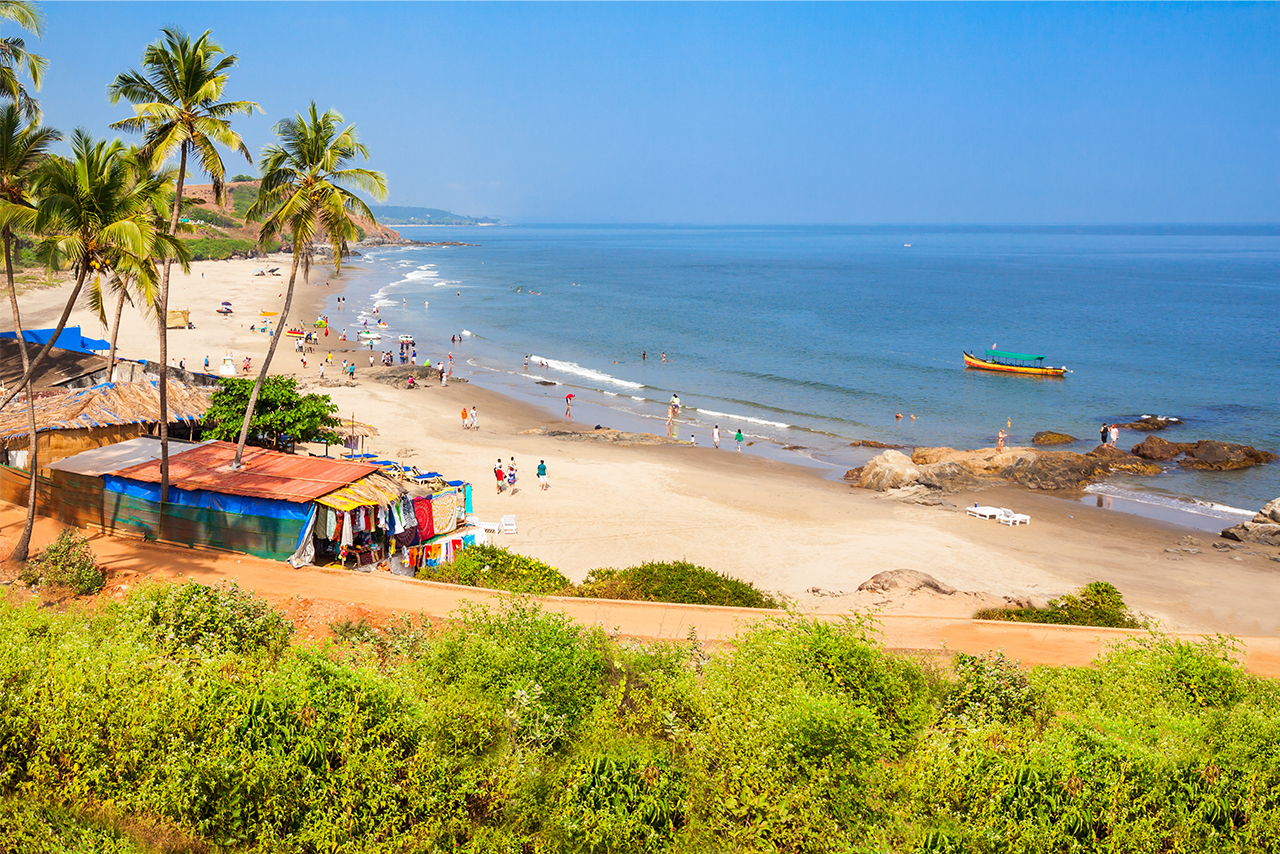
Sindhudurg has steadily emerged as a clean, experience-oriented tourism destination. Beaches like Tarkarli, Devbag, and Vengurla have gained recognition for water sports, eco-tourism, and cultural heritage.
Unlike overcrowded destinations, Sindhudurg’s tourism strategy focuses on:
- Low-density development
- Eco-sensitive zones
- Boutique hospitality
This controlled growth model supports sustainable land appreciation — a key reason analysts associate tourism momentum with the Goa Sindhudurg real estate boom 2026.
Why Infrastructure-Led Markets Outperform Speculative Markets
One of the biggest mistakes investors make is confusing visibility with value.
Markets driven by social media hype or short-term demand spikes often peak quickly. Infrastructure-led markets follow a slower but more durable curve.
According to World Bank studies, regions that receive sustained infrastructure investment experience long-term productivity and asset value growth.
Sindhudurg fits this model:
- Airports operational
- Highways under expansion
- Tourism policy aligned
- Land supply is still available
This structural setup is why the Goa Sindhudurg real estate boom of 2026 is attracting patient, long-horizon capital.
The Real Pain Point: Why Most Investors Miss Emerging Corridors
Despite clear signals, many investors fail to enter growth corridors early. The reasons are psychological and informational.
Most people notice growth only after price charts spike. By then, margins are compressed.
Over-Reliance on Urban Benchmarks
Comparing emerging corridors with metros leads to misjudgment. Growth corridors require different evaluation metrics.
Ignoring Infrastructure Timelines
Investors often underestimate how long infrastructure takes — and how valuable early positioning can be.
Understanding these pitfalls helps explain why informed investors track movements like the goa sindhudurg real estate boom 2026 years before mainstream coverage.
Regulation, Zoning, and Why Sindhudurg Offers Structural Stability
Coastal real estate is heavily regulated in India. This can be a risk — or a protective advantage.
CRZ Regulations
Coastal Regulation Zone (CRZ) norms limit unplanned construction and protect ecological balance.
While restrictive in the short term, CRZ norms prevent overdevelopment, preserving long-term land value.
Digitisation of Land Records
Maharashtra’s digital land record system improves transparency and reduces title disputes.
This regulatory clarity adds trust — an essential ingredient in the Goa Sindhudurg real estate boom 2026.
Who Is Actually Investing in the Goa–Sindhudurg Corridor?
The investor profile in this corridor is diverse but strategic.
Long-Term Land Investors
Looking for appreciation over 7–15 years.
Hospitality Entrepreneurs
Boutique resorts, eco-stays, experiential tourism.
Lifestyle Buyers
Remote workers, retirees, and second-home seekers.
NRIs
Seeking regulated, culturally familiar coastal exposure.
This diversified demand base supports the sustainability of the Goa Sindhudurg real estate boom 2026.
Risk vs Reality: Is the Goa–Sindhudurg Real Estate Boom 2026 Sustainable?
Every real estate cycle carries risk. The key is understanding which risks matter.
Infrastructure timelines can slip — patience is essential.
Liquidity
Land is a long-term asset. Short-term exits may be limited.
Policy Evolution
Tourism and environmental policies can evolve.
However, none of these negate the structural foundation of the goa sindhudurg real estate boom 2026 — they simply reinforce the need for informed decision-making.
What Smart Investors Evaluate Before Entering Emerging Corridors
Before investing in any growth corridor, experienced investors assess:
- Legal clarity
- Access roads
- Zoning compatibility
- Tourism demand
- Infrastructure buffers
- Holding horizon
Government resources like Invest India offer useful frameworks.
These filters separate opportunity from speculation — especially in narratives like the goa sindhudurg real estate boom 2026.
Long-Term Outlook: Why 2026 Is a Pivotal Year
By 2026, multiple infrastructure projects around Goa and Sindhudurg are expected to mature. Airport traffic stabilisation, highway completion phases, and tourism diversification will likely intersect.
Real estate history shows that value acceleration often follows infrastructure stabilisation — not announcement.
That is why analysts see 2026 as a tipping point in the goa sindhudurg real estate boom 2026 timeline.
FAQs
1. What is driving the Goa–Sindhudurg real estate boom 2026?
The goa sindhudurg real estate boom 2026 is primarily driven by infrastructure expansion, not speculation. Key factors include the operational Sindhudurg (Chipi) Airport, the opening of MOPA International Airport in North Goa, upgrades to National Highway-66, and Maharashtra’s tourism-led development strategy. Together, these improvements are reducing travel time, increasing tourism inflow, and improving long-term accessibility, which historically leads to sustained land value appreciation rather than short-term price spikes.
2. How is Sindhudurg different from already-developed coastal markets like Goa?
Unlike Goa, which has experienced dense development and pricing saturation in many areas, Sindhudurg still offers low-density land availability, controlled zoning, and relatively early-stage infrastructure integration. Development regulations in Sindhudurg emphasize eco-tourism and sustainable growth, which limits overconstruction. This structural difference is a major reason why the goa sindhudurg real estate boom 2026 is seen as a long-term growth story rather than a speculative extension of Goa.
3. Is infrastructure really complete, or is it still in the planning stage?
Several critical infrastructure elements are already operational. Sindhudurg Airport has been functional since 2021, and NH-66 upgrades are actively underway across multiple stretches. MOPA International Airport is already operational and handling international traffic. While some expressway projects are still under development, the foundation infrastructure supporting the goa sindhudurg real estate boom 2026 is not speculative — it is executable and partially delivered.
4. How does tourism growth impact land value in the Goa–Sindhudurg corridor?
Tourism directly affects land value by increasing demand for hospitality, second homes, rentals, and supporting services. Sindhudurg’s tourism model focuses on eco-tourism, water sports, heritage travel, and boutique stays, which typically generate consistent but controlled demand. This model avoids oversupply while supporting long-term appreciation, reinforcing the fundamentals of the goa sindhudurg real estate boom 2026.
5. Are Coastal Regulation Zone (CRZ) rules a risk for investors?
CRZ rules are often misunderstood as a negative factor. In reality, CRZ regulations protect coastal land from uncontrolled development, which helps preserve long-term value. In regions like Sindhudurg, CRZ compliance ensures that land scarcity increases over time rather than being diluted by overdevelopment. This regulatory protection is one reason the Goa Sindhudurg real estate boom 2026 is considered structurally stable.
6. Who should consider investing in the Goa–Sindhudurg real estate corridor?
The corridor is best suited for long-term investors, lifestyle buyers, hospitality entrepreneurs, and NRIs seeking regulated coastal exposure. It may not be ideal for short-term flippers, as land markets typically reward patience. Investors aligned with infrastructure timelines and tourism-led appreciation are the primary participants in the goa sindhudurg real estate boom 2026.
7. What are the key risks associated with emerging corridors like Sindhudurg?
The main risks include infrastructure execution delays, longer holding periods for liquidity, and evolving zoning policies. However, these risks are common to all emerging infrastructure corridors. What reduces risk in the goa sindhudurg real estate boom 2026 is the presence of operational assets (airports, highways) rather than reliance on announcements alone.
8. How long should investors plan to hold land in the Goa–Sindhudurg region?
Land investments in emerging corridors typically perform best over a 7–15 year horizon. Appreciation often accelerates after infrastructure projects stabilize and tourism demand matures. Investors viewing the goa sindhudurg real estate boom 2026 as a medium-to-long-term opportunity are more likely to benefit from compounding value growth.
9. How does improved highway connectivity affect land prices?
Highways increase land value by reducing travel time, improving logistics, and expanding catchment areas. Studies consistently show that land parcels within proximity to major highways outperform isolated assets over time. The NH-66 upgrade is a key contributor to the goa sindhudurg real estate boom 2026, as it integrates the region into broader economic networks.
10. Why is 2026 considered a critical year for the Goa–Sindhudurg real estate market?
By 2026, multiple infrastructure projects are expected to reach maturity phases — including airport traffic stabilization, highway completion milestones, and expanded tourism circuits. Historically, real estate value acceleration follows infrastructure stabilization, not initial announcements. This convergence makes 2026 a pivotal point in the goa sindhudurg real estate boom 2026 narrative.
Final Perspective: Timing, Patience, and Infrastructure
Real estate cycles rarely announce themselves loudly. The most enduring wealth creation in property has historically occurred not during moments of hype, but during quieter phases — when infrastructure is being built, policies are aligning, and demand is still forming rather than peaking. The goa sindhudurg real estate boom 2026 fits precisely into this pattern.
What distinguishes this corridor from many short-lived real estate trends is the sequence of growth drivers. Instead of price inflation preceding infrastructure, the opposite is happening here. Airports are operational. Highways are expanding. Tourism frameworks are being formalized. Only after these fundamentals are in place is broader market attention begin to follow. This sequence matters because it reduces speculative risk and increases the probability of sustained value creation.
Timing, in this context, does not mean rushing to act. It means understanding where a market stands in its development lifecycle. The Goa–Sindhudurg corridor today sits between early execution and wider recognition. It is no longer speculative, yet it is not fully priced. That middle phase — when infrastructure visibility is real but mass participation is limited — is often where informed investors position themselves.
Patience is the second, and often underestimated, component of this equation. Land and corridor-based real estate do not behave like traded assets. Value creation unfolds gradually, shaped by access improvements, policy stability, and demand maturation. Investors who enter such markets expecting immediate liquidity often become disillusioned. Those who align their expectations with infrastructure timelines tend to experience compounding benefits. In the context of the Goa Sindhudurg real estate boom 2026, patience is not passive; it is strategic.
Infrastructure, however, remains the central pillar tying timing and patience together. Roads, airports, and regional connectivity do more than shorten travel times — they expand economic catchments. They change how regions are perceived, used, and integrated into larger economic systems. When a coastal region shifts from being “remote” to “reachable,” its land economics transform fundamentally. Sindhudurg is undergoing precisely this transition.
Equally important is the nature of the infrastructure shaping this corridor. The focus is not on unchecked urbanization, but on connectivity that supports tourism, lifestyle migration, and low-density development. This distinction is critical. Markets that grow through controlled infrastructure expansion tend to retain their character, scarcity, and long-term desirability. That balance is what separates sustainable growth corridors from overbuilt destinations.
Another often-overlooked aspect is regulatory discipline. Environmental norms, zoning clarity, and land record transparency can feel restrictive in the short term, but they act as long-term safeguards for value. In coastal regions, especially, regulation prevents oversupply and preserves natural capital — both of which underpin long-term appreciation. In this sense, regulation is not a hurdle but a filter, ensuring that growth remains measured rather than chaotic.
The goa sindhudurg real estate boom 2026 should therefore not be viewed as a singular event or a one-year spike. It is better understood as a multi-year transition — from an underaccessed coastline to an integrated regional corridor. Such transitions do not reward impulsive decisions. They reward informed positioning, realistic timelines, and a clear understanding of how infrastructure-led growth unfolds.
For individuals researching this corridor today, the most valuable takeaway is not whether prices will rise tomorrow or next year. It is whether the structural conditions for sustained demand, accessibility, and usability are being built — and whether those conditions align with their own investment horizon. When infrastructure, policy, and geography move in the same direction, markets tend to follow with time.
Ultimately, real estate success is less about predicting peaks and more about recognizing foundations. The Goa–Sindhudurg corridor presents a case where foundations are visible, execution is underway, and the narrative is still forming. In such moments, clarity matters more than conviction, and understanding matters more than urgency.
In that sense, the story of the Goa Sindhudurg real estate boom 2026 is not about chasing opportunity. It is about recognizing it early, respecting its timeline, and allowing infrastructure — not hype — to do the heavy lifting over time.