Goa Real Estate Trends 2026: How Airports, Highways & Infrastructure Are Rewriting Demand
For decades, Goa’s real estate market was driven by a simple equation: tourism + second homes. Properties were bought for holidays, occasional rentals, or as long-term lifestyle assets meant to be used sparingly. That equation is now changing rapidly.
Goa real estate trends 2026 reflect a far more structural shift — one shaped by airports, highways, elevated corridors, and year-round accessibility. What was once a seasonal market is gradually transforming into a hybrid ecosystem of permanent residences, long-stay homes, and income-generating assets.
This transformation is not accidental, nor is it driven by speculation alone. It is the result of sustained infrastructure investment, behavioural changes among homebuyers, and a growing preference for liveable, well-connected destinations over crowded urban centres.
In this article, we break down Goa real estate trends 2026 from the ground up — focusing on facts, verified data, and real demand drivers rather than marketing narratives.
Goa’s Shift From a Vacation Market to a Year-Round Living Destination
One of the most defining Goa real estate trends 2026 is the gradual transition from short-term holiday ownership to long-term, year-round living.
Several forces are converging here:
- Remote and hybrid work models have normalized location-agnostic living
- Urban fatigue has increased post-pandemic
- Buyers are prioritizing lifestyle, health, and time efficiency
- Access to daily infrastructure (airports, hospitals, highways) now matters as much as beaches
As a result, Goa is no longer viewed purely as a “break destination.” It is increasingly seen as a secondary base, or even a primary residence, especially among professionals, entrepreneurs, and retirees.
This behavioural change is central to understanding the Goa real estate trends 2026. Demand is no longer limited to peak seasons. Properties that offer connectivity, privacy, and daily usability are gaining preference over purely touristic assets.
Mopa International Airport: The Inflection Point in Goa’s Property Map
No single development has influenced the Goa real estate trends 2026 more than the Manohar International Airport at Mopa.
Operational since January 2023, the airport marked a structural shift in how North Goa — and its surrounding belts — connect with the rest of India and international destinations.
Unlike earlier phases of Goa’s growth, where accessibility was a bottleneck, Mopa has introduced predictability and scale. According to publicly available data, the airport has already handled millions of passengers annually, signalling operational maturity rather than speculative promise.
Why this matters for real estate:
- Predictable flight connectivity supports year-round occupancy
- Shorter travel times increase weekend and mid-week usage
- Buyers feel confident holding property long-term
- Service ecosystems (healthcare, retail, logistics) follow aviation infrastructure
In the Goa real estate trends 2026, airports are no longer just transport assets — they are decision enablers.
The Airport Corridor Effect: How Connectivity Reprices Land
One of the most studied phenomena in urban real estate is the airport corridor effect — where areas surrounding major aviation infrastructure witness accelerated demand, price rationalization, and long-term absorption.
Goa is now firmly part of this pattern.
According to Business Today, airport-led corridors across India — including Goa — are witnessing increased housing demand due to improved accessibility and lifestyle viability.
This effect reshapes the Goa real estate trends 2026 in three ways:
- Demand spreads outward from saturated hotspots
- Buyers prioritize commute time over proximity to tourist zones
- Early-stage micro-markets gain long-term relevance
Importantly, this is not speculative inflation. It is use-driven demand, where land becomes valuable because it fits into daily life — not because it sounds aspirational.
Highways and Elevated Corridors: Why Minutes Matter More Than Marketing
Beyond airports, surface connectivity is another major driver shaping Goa real estate trends 2026.
North Goa has historically faced congestion issues, especially during peak seasons. The development of elevated corridors, particularly around Porvorim, is aimed at easing these choke points and enabling smoother movement across key residential and commercial zones.
According to The Goan, significant progress has already been made on the Porvorim elevated corridor, a project expected to reduce travel time and decongest arterial roads.
Times of India has also reported on timelines and expectations surrounding the project, reinforcing its importance to daily mobility.
In Goa real estate trends 2026, time efficiency is becoming a key valuation metric. Locations that reduce daily friction — whether through highways, elevated corridors, or direct arterial access — are increasingly preferred over visually attractive but logistically inconvenient areas.
Cruise Tourism Infrastructure: A Silent Catalyst for Rental Demand
Another under-discussed component of the Goa real estate trends 2026 is the expansion of cruise tourism infrastructure.
The development of a new cruise terminal at Mormugao Port, scheduled for completion around 2025, is expected to significantly boost cruise traffic and organized tourism inflow.
Unlike road-based tourism, cruise traffic tends to be:
- Structured
- Higher spending
- Less seasonal
- Dependent on organized hospitality and rentals
Travel + Leisure Asia also notes that the cruise terminal is part of India’s broader strategy to enhance maritime tourism.
For real estate, this translates into consistent short-term rental demand, service sector growth, and stronger viability for managed stays — all of which influence Goa real estate trends 2026.

The Rise of Luxury Villas: Privacy, Land, and Long-Stay Living
As connectivity improves, buyer preferences shift — and one of the clearest outcomes in Goa real estate trends 2026 is the rising demand for luxury villas over compact apartments.
Why villas are gaining preference:
- Greater privacy for long stays
- Land ownership as a value anchor
- Better adaptability for rental and personal use
- Multi-generational living flexibility
According to Business Today, Goa has seen a reported 66.3% year-on-year rise in residential prices, with high-value villas leading demand in several North Goa pockets.
Fortune India has echoed similar observations, highlighting Goa’s growing appeal as a premium residential and investment destination.
It is important to note that these figures are reported estimates, not government valuations. However, they provide context for understanding demand intensity within the Goa real estate trends 2026.
North Goa vs Emerging Edge Belts: Understanding the New Demand Map
A nuanced understanding of Goa real estate trends 2026 requires moving beyond blanket assumptions about “North Goa” or “South Goa.”
What we are witnessing instead is a micro-market realignment:
- Core North Goa areas command premium pricing but face density and saturation
- Peripheral belts — especially those aligned with NH corridors and airport access — offer space, privacy, and long-term potential
- Buyers are increasingly willing to trade proximity for quality of life
These emerging edge belts are not speculative frontiers. Their relevance depends on clear access roads, legal clarity, and integration with the broader infrastructure network.
What Serious Buyers Must Evaluate Before Buying in Goa
As Goa real estate trends 2026 mature, informed buyers are becoming more selective. Beyond location and pricing, due diligence now includes:
- Clear land title and approvals
- Access road legality and right of way
- Flood patterns and monsoon behaviour
- Water availability and drainage planning
- Power infrastructure reliability
- Local regulations for rentals
- Long-term maintenance feasibility
- Exit liquidity and resale audience
These factors often determine whether a property remains a lifestyle asset or becomes a liability over time.
The 2026–2030 Outlook: What Happens After Infrastructure Stabilizes
Infrastructure-led markets typically follow a predictable cycle:
- Early attention phase
- Adoption and end-user entry
- Demand stabilisation
- Price rationalization and rental maturity
With Mopa Airport operational since 2023 and road infrastructure progressing steadily, the Goa real estate trends 2026 sit at a critical midpoint — where usability overtakes hype.
This phase often rewards buyers who focus on fundamentals rather than speculation.
FAQ
1. What are the key drivers behind Goa real estate trends 2026?
Goa real estate trends 2026 are primarily driven by large-scale infrastructure development, improved connectivity, and a shift in buyer behaviour toward year-round living. The operationalization of Manohar International Airport (Mopa), highway upgrades, and cruise tourism infrastructure have reduced travel friction and increased long-term demand. These changes are transforming Goa from a seasonal holiday market into a sustainable residential and rental destination.
2. How has Mopa International Airport impacted Goa’s property demand?
Mopa International Airport has significantly reshaped the Goa real estate trends 2026 by enabling faster, more predictable access to North Goa and the surrounding regions. Since becoming operational in January 2023, the airport has supported year-round connectivity, encouraging buyers to consider Goa for longer stays and permanent residences rather than short vacations.
3. What is the airport corridor effect in real estate, and how does it apply to Goa?
The airport corridor effect refers to increased real estate demand and value appreciation in regions surrounding major airports due to improved accessibility. In the Goa real estate trends 2026, this effect is visible in areas aligned with Mopa Airport and major highways, where usability, rental demand, and end-user confidence have risen.
4. Why are luxury villas gaining preference in Goa over apartments?
One of the strongest Goa real estate trends 2026 is the growing preference for luxury villas. Improved connectivity has made longer stays feasible, increasing demand for privacy, land ownership, and flexible living spaces. Villas also offer better adaptability for both personal use and managed rentals, especially in low-density, well-connected areas.
5. Are Goa property prices really rising as fast as reported?
Several market reports indicate a sharp rise in residential prices, with some citing a 66.3% year-on-year increase in specific micro-markets. While these figures are based on industry data rather than government valuations, they reflect heightened demand intensity within the Goa real estate trends 2026, particularly for villas and premium properties.
6. How do highway and elevated corridor projects affect real estate demand in Goa?
Road infrastructure plays a critical role in the. Goa real estate trends 2026Projects such as the Porvorim elevated corridor aim to reduce congestion and travel time in North Goa, making daily commuting and year-round living more practical. Locations with smoother access are increasingly preferred over congested tourist-heavy zones.
7. Does cruise tourism infrastructure impact Goa’s real estate market?
Yes. Cruise tourism infrastructure is a lesser-known but important contributor to the Goa real estate trends 2026. The upcoming cruise terminal at Mormugao Port is expected to boost structured tourism inflow, which supports short-term rentals, hospitality services, and premium residential demand near key access routes.
8. Is North Goa still the strongest region for real estate demand in 2026?
North Goa remains a key demand driver, but Goa real estate trends 2026 show growing interest in emerging edge belts connected by highways and airport corridors. Buyers are increasingly open to locations slightly away from dense hotspots if they offer better space, privacy, and long-term livability with reliable access.
9. What should buyers verify before investing in Goa real estate?
As Goa real estate trends 2026 mature, due diligence has become essential. Buyers should verify land titles, access roads, zoning regulations, flood patterns, water availability, and rental permissions. Infrastructure readiness often matters more than visual appeal when evaluating long-term viability.
10. Is Goa real estate suitable for long-term investment beyond 2026?
Goa’s real estate market is entering a stabilization phase where infrastructure has moved from planning to execution. This positions Goa real estate trends 2026 as a transition period toward sustainable, end-user-driven demand rather than speculation. Long-term prospects depend on connectivity, legal clarity, and livability rather than short-term price movements.
Why Connectivity Is the Real Luxury
For a long time, luxury in Goa was defined by proximity to the beach, visual appeal, or exclusivity. While those elements still matter, the Goa real estate trends 2026 reveal a deeper shift in how value is perceived. Today, the real luxury is not how close a property is to a postcard view, but how seamlessly it integrates into everyday life.
Connectivity has quietly become the most decisive factor in real estate decision-making. Airports that reduce travel uncertainty, highways that save time, and corridors that ease congestion fundamentally change how people use a place. When travel becomes predictable and effortless, ownership moves from occasional indulgence to habitual living. This is exactly what is unfolding across Goa’s evolving real estate landscape.
What makes Goa real estate trends 2026 especially noteworthy is that this transformation is infrastructure-led, not hype-driven. Mopa International Airport is operational, not proposed. Highway and elevated corridor projects are under execution, not announcement. Cruise tourism infrastructure is being built to handle real volumes, not symbolic footfall. These are the markers of a market maturing through functionality rather than speculation.
As a result, buyer behaviour is also maturing. People are no longer asking only “Is this beautiful?” They are asking “Can I live here comfortably?”, “Will this still work five or ten years from now?”, and “Does this location reduce friction in my daily life?” These questions signal a healthier, more resilient market.
In this context, Goa is gradually redefining itself—from a destination to escape to, into a destination to belong to. The regions that align with this shift—those connected to airports, highways, and essential infrastructure—are likely to remain relevant long after short-term trends fade. This is why connectivity has emerged as the true currency of value in Goa real estate trends 2026.
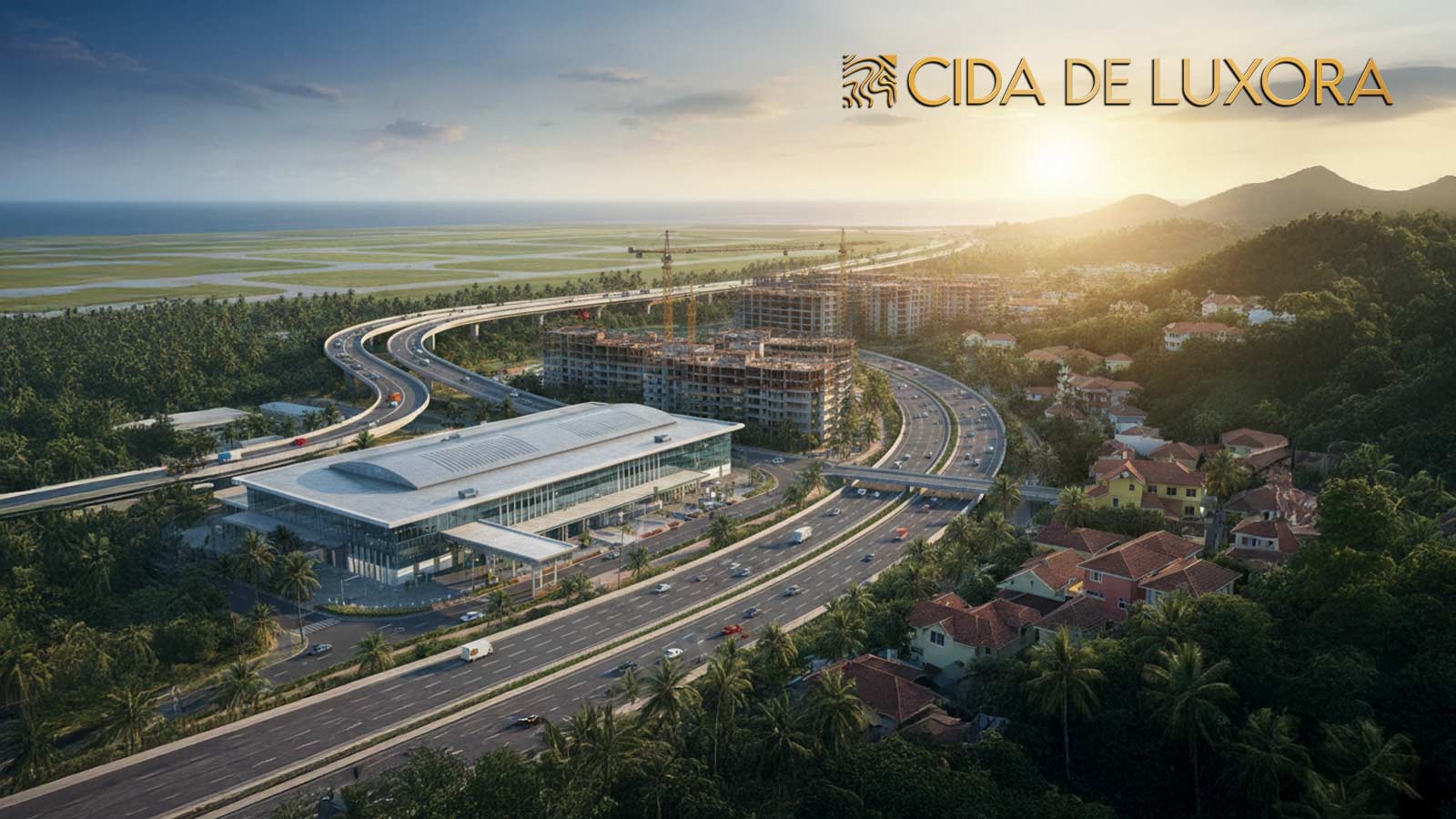
For those studying plotted or villa-focused developments near key access corridors, the broader lesson is simple: prioritise fundamentals over flair. Legal clarity, infrastructure readiness, and long-term livability matter more than momentary appeal. Within this evolving landscape, developments such as Cida De Luxora may be evaluated as part of the wider connectivity-driven growth story—strictly on the strength of planning, access, and sustainability rather than marketing promise.
Because in the next chapter of Goa’s real estate journey, ease of living will always outperform excess.