The ₹520-Crore Tourism Lift: How New Infrastructure Is Re-Rating Plots in Maha Goa for 2025 Investors
For years, India’s coastal dream was defined by familiar names: Baga, Candolim, Calangute, Palolem. But as these pockets of Goa have turned into saturated, high-ticket markets, serious investors have quietly started looking just beyond the state border — towards a region now being branded as Maha Goa.
Maha Goa is not a political boundary; it’s an investment idea. It covers the high-potential Sindhudurg–North Goa belt, stitched together by two airports, three major highways, white-sand beaches, and a tourism pipeline that is only getting started. Inside this emerging zone, plots in maha goa have moved from “nice-to-have second home sites” to “data-backed, infrastructure-led investment assets.”
What changed? In one line: a ₹520-crore airport, a 47.2-lakh-passenger international gateway, and three massive connectivity projects that have dragged this coastline into a new growth orbit.
This blog unpacks, with numbers and government references, why plots in maha goa are being re-rated in 2025 — and why this may be the most strategic phase to enter the market.
The ₹520-Crore Trigger: Chipi Airport Rewires the Konkan Map
When the Government of India cleared Sindhudurg (Chipi) Airport with a project cost of about ₹520 crore, it was not just another regional airport decision. In official documentation, the government is clear: the airport is meant to improve air connectivity to northern Karnataka, western Maharashtra and parts of Goa, boost tourism, and support economic development across the Konkan region.
You’ll find this clearly spelt out in the Press Information Bureau communication and in explanatory articles on the airport project.
Chipi Airport, located near the Chipi–Parule villages in Sindhudurg, has:
- A runway of around 2,500 metres, with scope for extension in future
- Peak-hour handling capacity of about 400 passengers (200 arrival + 200 departure)
- Project cost estimated at ₹520 crore, under the government’s UDAN regional connectivity scheme.
For a region previously dependent on long, winding road journeys from Mumbai or Pune, this is a structural shift. Instead of 9–10 hours by car, travellers can now reach the area in roughly 90 minutes of flying time plus a short drive. That single change makes plots in maha goa viable as weekend homes, hospitality assets, wellness retreats, or retirement villas.
A specialised real-estate and hospitality study on the Chipi Airport impact by Axon Developers goes further: it frames the airport as a catalyst for second homes, nature-based tourism and boutique hospitality, and notes that the airport is already reshaping demand patterns in locations such as Vengurla, Kudal and Sawantwadi.
For investors evaluating plots in maha goa, this matters because:
- Airports typically create multi-year appreciation cycles in a 30–50 km radius.
- Tourism supply — homestays, resorts, cafés, experience stays — flows in after connectivity is established.
- Land, especially inside gated formats and themed communities, starts getting re-rated because future cash flows (rentals / appreciation) become more predictable.
In other words, the ₹520-crore spend is not a headline; it is the starting point of a new valuation story for plots in maha goa.
Mopa International Airport: 47.2 Lakh Passengers and a Massive Spillover
If Chipi is the tourist gateway from Maharashtra’s side, Manohar International Airport (Mopa) is the global gateway feeding North Goa and the Maha Goa belt.
By 2024, Mopa had handled 47.2 lakh passengers, growing 26.6% over 2023, according to updates reported by regional outlets like Digital Goa and other airport coverage portals. Domestic passenger traffic moved from 36.7 lakh in 2023 to 44.7 lakh in 2024, while international passengers climbed from 50,000 to 2.5 lakh in just one year.
This is not slow, incremental growth. It’s a classic early-stage scaling curve:
- A brand-new airport gains traction with domestic tourists.
- International connectivity ramps up.
- Hospitality, tourism, and allied services respond with aggressive expansion.
Mopa is also being developed with an Aerocity concept — a large, integrated zone with hotels, commercial centres, convention facilities and business parks in its wider influence area. This ecosystem feeds premium tourism demand into nearby regions; that’s where plots in maha goa come in.
As North Goa’s prime beaches and inland micro-markets become more expensive and built-out, investors are naturally looking for:
- Larger land parcels
- Quieter, more scenic stretches
- Better long-term appreciation potential
- Proximity to an international airport without paying peak North Goa prices
The Sindhudurg–Sawantwadi belt, which we’re calling Maha Goa in this context, fits perfectly. From Mopa, many of these locations are about 30–40 minutes by road, depending on the exact site. That makes plots in maha goa strongly positioned for villa developments, revenue-generating second homes, and branded-gated communities like Cida De Luxora.

The Infra Triangle: Highways That Turn “Far” Into “Near”
Airports change access across states. Highways change access across weekends.
Maha Goa is strategically locked into three major roadway projects that collectively make plots in maha goa functionally “closer” to Mumbai and Pune, even if the distance on a map stays the same.
3.1 NH-66 (Old NH-17): Mumbai–Goa Highway, 70% Upgraded
NH-66 is the arterial coastal highway running from Panvel near Mumbai down all the way to Kerala, with about 475 km of its length in Maharashtra. The Maharashtra government and PWD updates indicate that a large portion of the upgradation and repair work on the Mumbai–Goa stretch — roughly 70% — has been completed, with additional focus on durability and high seasonal traffic loads.
Some stretches are being built using steel slag technology to make the road more resilient and long-lasting. During festive seasons, this highway manages lakhs of travellers heading into the Konkan region, including towards Sindhudurg.
For plots in maha goa, the NH-66 story is simple:
- Faster, smoother connectivity from Mumbai and Pune
- Better drivability year-round
- Shorter perceived distance, especially for weekend use
- Stronger case for second homes and frequent visits
3.2 Revas–Reddy Coastal Highway: Shorter, Scenic Mumbai–Sindhudurg Drives
The proposed Revas–Reddy Coastal Highway (often referred to informally as the Konkan coastal road) aims to connect Mumbai to Sindhudurg via Raigad and Ratnagiri through a scenic, sea-facing alignment. Updates on the project from MSRDC and media describe it as a game-changing corridor that could bring Mumbai–Sindhudurg travel down to about 4–5 hours instead of the longer, congested NH-66 route.
The impact on plots in maha goa is obvious:
- More Mumbai-based families are willing to consider land in this belt as a regular-use lifestyle asset, not just a once-a-year visit place.
- Road-trippers, weekend travellers, and digital nomads treat Maha Goa as a logical alternative to crowded North Goa.
- Businesses that rely on road connectivity — cafés, wellness centres, boutique stay operators — get a predictable inflow of customers.
3.3 Konkan Expressway (ME-6): The Future High-Speed Spine
The planned Konkan Expressway (ME-6), proposed as a 376 km six-lane access-controlled expressway, is designed to connect Panvel to Sindhudurg via Raigad and Ratnagiri. It’s envisioned as a high-speed corridor running roughly parallel to the coastline, decongesting NH-66 and enabling both tourism and logistics.
Once active, such a corridor:
- Reduces door-to-door travel times dramatically
- Encourages people to live further away from dense cities while staying connected
- Increases the economic value of land along its influence zone
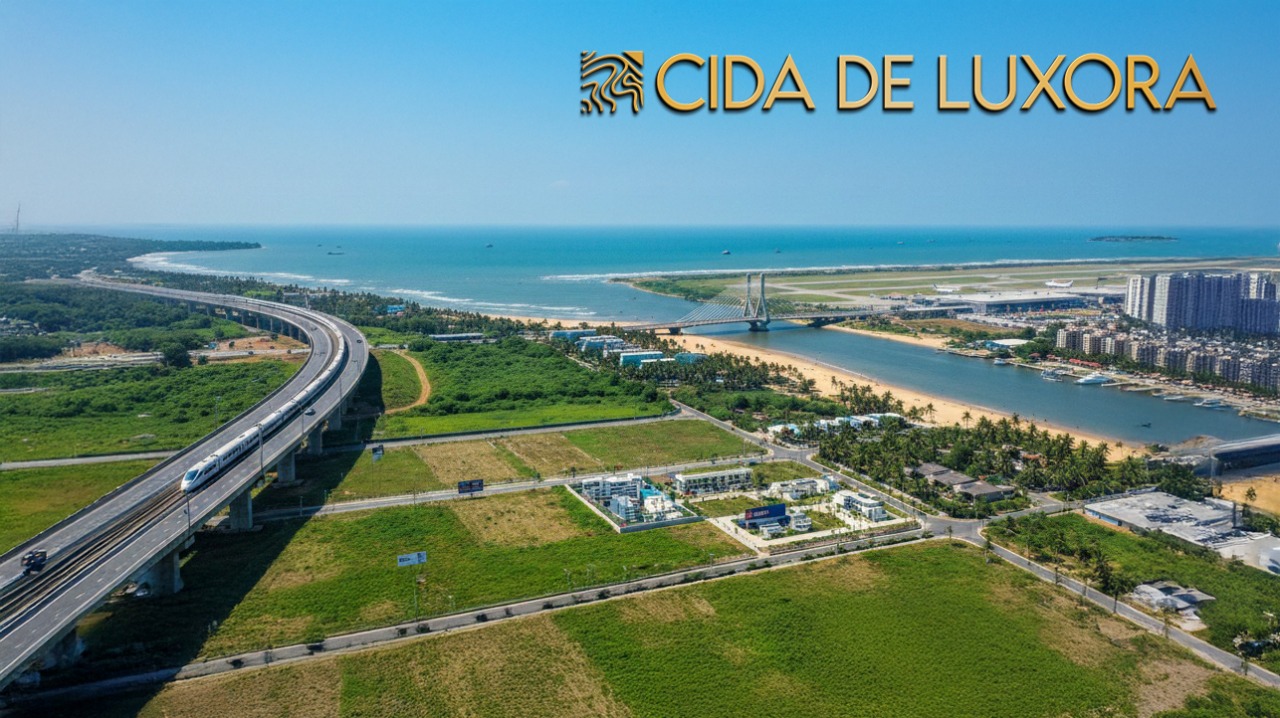
When you overlay airports + NH-66 + Coastal Highway + Konkan Expressway on a map, you can literally see why plots in maha goa are transitioning from “remote Konkan plots” to “strategic coastal land with tier-1 connectivity.”
Tourism Data: The Bigger Demand Wave Behind the Micro-Market
To understand why long-term demand for plots in maha goa is likely to be durable, we have to zoom out and look at India’s tourism numbers.
According to the India Tourism Data Compendium 2024 from the Ministry of Tourism , domestic tourist visits rose from about 1,731 million in 2022 to 2,509.63 million in 2023, a 44.98% jump in just one year.
Additional highlights from these and related summaries:
- India recorded 19.25 million foreign tourist visits in 2023.
- Maharashtra ranks among the leading states for foreign tourist arrivals, with around 3.39 million international visitors, ahead of many other regions.
- Tourism-related direct and indirect jobs have crossed 76 million, reflecting how large the sector is becoming in the national economy.
Media and industry analyses further suggest that domestic trips could double by 2030, driven by rising incomes, better connectivity, and government focus on tourism infrastructure.
For a coastal, airport-connected region inside Maharashtra, this is very good news. It means tourism is not a short-term post-COVID rebound; it’s a structural consumption trend. And wherever tourism sustains, land near the tourism infrastructure — hotels, airports, beaches, and highways — tends to appreciate faster.
Since plots in maha goa sit at the intersection of Maharashtra’s tourism leadership and Goa’s international brand pull, they benefit from both sides of the demand curve:
- Domestic tourists exploring less crowded, more natural stretches of the Konkan
- International travellers entering via Goa but open to nearby quieter stays and retreats
- NRIs and HNIs looking for second homes away from the main tourist hubs but still well connected
Sindhudurg’s Tourism & Brand Evolution: From “Hidden Gem” to “Next Luxury Coast”
Zoom in again — this time to Sindhudurg district, which forms the core geography for many plots in maha goa.
This district is uniquely loaded:
- Beaches: Tarkarli, Shiroda, Vengurla, Bhogwe
- Adventure & marine tourism: scuba diving, snorkelling, backwater boating, dolphin spotting
- Heritage: forts, temples, old coastal settlements
- Nature: mangroves, backwaters, greenery, low pollution
Over the last few years, hospitality and tourism investment in Sindhudurg has accelerated:
- Tata group’s IHCL has signed a large 138-acre resort project in Shiroda, with 150 rooms and 46 villas, aimed at the upper-upscale segment. Information can be tracked via IHCL’s corporate announcements.
- Eco- and green-hospitality brands are exploring multiple projects across the district, focusing on sustainable tourism and low-density stays.
- A proposed film city project in Sindhudurg, with reported investment estimates in the thousands of crores, has also been discussed in media reports.
In parallel, branded developers have started creating gated communities and luxury plotted developments positioned between North Goa and Sindhudurg’s beaches. This is precisely where well-located plots in maha goa become interesting — not just as speculative land, but as curated, master-planned luxury assets.
Goa vs Maha Goa: A Comparative Real-Estate View
To understand value, you always compare.
What’s Happening in North Goa?
The North Goa Residential Market Watch H1 2024 by Savills, also mirrored on regional Savills sites .
- Average capital values for villas in North Goa rose about 28% year-on-year.
- Demand is concentrated in popular coastal belts such as Anjuna, Arpora, Baga, Calangute, Candolim and Vagator.
- Many buyers are professionals and entrepreneurs relocating from major metros like Mumbai, Delhi and Bengaluru, attracted by high rental yields and lifestyle advantages.
Separate property portals like Housing.com reflect high average prices for North Goa, with many micro-markets commanding premium per-square-foot rates that make entry more challenging for new investors.
In short: North Goa is strong — but mature and relatively expensive.
How Does Maha Goa Stack Up?
By contrast, market studies around the Chipi Airport influence zone and internal investor reports indicate
- Land price CAGRs in key Sindhudurg micro-markets have been estimated in the 24–26% range over recent years and projected forward for the medium term.
- Investor inquiries in the broader Sindhudurg belt have risen sharply since the operationalisation of the airports and intensification of highway work.
- Many locations in Maha Goa still start from a lower base price than North Goa, offering more headroom for appreciation.
For investors, this means plots in maha goa occupy an attractive middle ground:
- They are not as expensive as central Goa micro-markets.
- They offer better infrastructure and tourism upside than completely undeveloped stretches.
- They benefit from both Maharashtra’s tourism strategy and Goa’s international visibility.
Cida De Luxora: A Case Study in How Maha Goa Land Is Being Curated
Now let’s anchor this macro picture into a real, on-ground project: Cida De Luxora (CDL).
CDL is an 11-acre, Roman-inspired, ultra-luxury gated community situated in the Sawantwadi–Maha Goa belt. It’s designed not just as a residential layout but as a fully integrated, luxury ecosystem combining:
- Large villa plots (starting from around 600 sq. yards)
- High-street luxury retail spaces facing NH-66
- Premium office spaces along SH-180
- Clubhouse, spa, gym, landscaped gardens, walking trails
- Smart-home infrastructure, 24/7 security, access control
- Concierge services and a curated luxury experience
The location ties directly into everything we’ve discussed so far:
- ~2 minutes from NH-66 (Mumbai–Goa highway)
- Located on State Highway 180, which leads towards white-sand beaches
- Within a comfortable driving radius of Chipi Airport and Mopa Airport
- Close to well-known beaches like Vengurla, Shiroda, Querim
- Supported by nearby schools, hospitals and tourism infrastructure
For investors, what makes CDL-backed plots in maha goa particularly compelling is the combination of:
- Macro tailwinds: tourism growth, airports, highways.
- Micro curation: theme-based architecture, Roman design, gated planning.
- Limited inventory: only a small number of villa plots in a closed, walled community.
- Blend of uses: residential, retail and office — creating a live–shop–work environment.
This is very different from buying a random, unserviced land parcel in the middle of nowhere. It represents structured coastal land investing.
Investor Profiles: Who Is Actually Buying Plots in Maha Goa?
To further qualify the opportunity, it helps to look at who is being drawn to plots in maha goa:
Second-Home Seekers from Mumbai & Pune
These are buyers who:
- Have seen North Goa prices skyrocket.
- Want quieter, less-crowded stretches.
- Prefer a gated, secure, amenity-rich community rather than standalone village homes.
- Are comfortable with a mix of air + road travel, especially now that airports and highways are improving.
For them, plots in maha goa inside projects like CDL strike the right balance between accessibility, privacy and long-term growth.
NRIs and Global Indians
Many NRIs today want:
- A coastal anchor in India for family visits, vacations and eventual retirement.
- A location with lower pollution, greenery and access to beaches.
- A property format that feels future-proof — well-planned land inside a solid, legally sound project.
For this profile, plots in maha goa offer something Goa often no longer does: space, serenity, and a sense of “getting in early” rather than buying at the peak.
HNIs and UHNIs Building Legacy Villas
High-net-worth individuals are increasingly:
- Moving away from apartments and even standard villas, towards large, custom-designed estates.
- Wanting master-suite floors, private pools, outdoor decks, home offices, wellness spaces, and staff quarters — which require bigger footprints.
A 600+ sq. yard plot format gives them design freedom. In that context, plots in maha goa inside CDL allow them to create truly bespoke villas without compromising on connectivity or aesthetics.
FAQs
1. Why are plots in maha goa becoming a top investment choice in 2025?
Plots in maha goa are benefiting from a rare convergence of infrastructure and tourism upgrades. With a ₹520-crore airport project at Chipi (Sindhudurg), a rapidly scaling international airport at Mopa, and three major highway corridors (NH-66, Konkan Coastal Highway, Konkan Expressway), the region is witnessing the same early-stage growth pattern previously seen in North Goa and parts of Bengaluru and Hyderabad. As tourism demand rises and connectivity friction drops, land values along the Maha Goa belt are getting re-rated, especially within gated communities and master-planned projects. For investors, this is an opportunity to enter the market before large-scale hospitality development drives prices higher.
2. Are plots in maha goa better than buying a villa or apartment in North Goa?
North Goa continues to perform strongly, but it has become saturated and significantly more expensive. Premium villa prices in North Goa grew nearly 28% YoY, and land is scarce. Plots in maha goa offer larger sizes, lower entry points, quieter beachfront locations, strong connectivity to both Mopa and Chipi airports, and higher appreciation potential because the region is still in its early development cycle. Investors get the advantage of North-Goa-like tourism demand without paying North-Goa-like premiums.
3. How will Chipi and Mopa airports impact long-term appreciation for plots in maha goa?
Airports have historically triggered long-term real estate booms in their influence zones. Chipi Airport is a ₹520-crore government-approved project designed to boost tourism and economic development, while Mopa Airport already handles 47.2 lakh passengers a year—a 26.6% YoY growth. As tourist footfall rises and travel time reduces, demand for villa developments, homestays, second homes, and hospitality assets accelerates. This creates a sustained appreciation cycle for plots in maha goa, especially those within strategic proximity to both airports.
4. Is it safe to invest in plots in maha goa from a legal and regulatory standpoint?
Yes—plots in maha goa located within government-approved, master-planned developments such as CDL offer clear titles, structured layout planning, compliance with local zoning regulations, and secured boundaries. However, caution is necessary when buying standalone agricultural or unconverted land parcels. Investors should ensure NA (non-agricultural) permissions, clear demarcations, and proper layout approvals. Choosing a reputed developer significantly reduces legal and regulatory risks.
5. What kind of appreciation can I expect from plots in maha goa over the next 5–10 years?
Multiple studies indicate strong upside potential. Micro-markets like Vengurla, Kudal, Sawantwadi, and Bhogwe have shown 24–26% land price CAGR in recent years. Post-airport operationalisation, investor inquiries surged 38%, and several government and private projections anticipate long-term coastal development in Sindhudurg. While appreciation varies by location and project, gated communities like CDL—supported by tourism, infrastructure, and limited supply—typically outperform standalone plots over a 5–10 year horizon.
6. Who is buying plots in maha goa today—NRIs, HNIs, or domestic investors?
All three segments are active. NRIs prefer plots in maha goa for long-term second homes and retirement villas due to the region’s low pollution, greenery, and beach access. HNIs and UHNIs value the privacy and customisation flexibility of large villa plots. Domestic buyers from Mumbai and Pune are entering the market because Maha Goa offers North-Goa-level connectivity and beauty at one-third the entry cost. The diversity of buyers is a strong signal of market maturity.
7. Can plots in maha goa generate rental income once developed into villas?
Yes. Tourism in Maharashtra and Goa is expanding rapidly, with domestic tourist visits rising from 1.73 billion in 2022 to over 2.5 billion in 2023. Premium villas in Goa already enjoy some of the highest rental yields in India. With the entry of IHCL (Taj), eco-resorts, and boutique hospitality brands in the Sindhudurg belt, demand for private luxury stays is rising. Well-designed villas built on plots in maha goa can generate strong holiday-rental income, especially on weekends and peak travel seasons.
8. How far are plots in maha goa from major beaches and tourist destinations?
Depending on the micro-location, most plots in maha goa are within 10–35 minutes of multiple white-sand beaches such as Vengurla, Shiroda, Bhogwe, and Querim. Many sites also sit close to popular Goa beaches like Arambol and Mandrem. From CDL’s location, Vengurla is about 15 minutes, Shiroda around 30 minutes, and Querim roughly 35 minutes. This proximity enhances tourism viability, rental potential, and capital appreciation.
9. Are plots in maha goa suitable for luxury villa development?
Absolutely. The region is seeing rapid uptake in premium hospitality investments—Taj Hotels is developing a 138-acre resort in Shiroda, Eco Hotels is launching multiple green resorts, and the film city proposal adds long-term tourism demand. Buyers increasingly seek private, theme-based gated communities where they can design bespoke villas with modern architecture. Projects like CDL offer Roman-themed streetscapes, large plot sizes (600 sq yards+), and curated amenities—ideal for luxury villas, weekend estates, and retirement homes.
10. Why should I invest in plots in maha goa now instead of waiting?
Because 2025–2030 represents the inflection point of infrastructure-led coastal growth. North Goa is already mature. Maha Goa sits at the intersection of two airports, three major highways, expanding tourism investments, luxury hospitality development, and rising buyer interest. As more projects and brands enter Sindhudurg, land scarcity will increase and prices will accelerate. Buying plots in maha goa now allows investors to capture appreciation before the region reaches a saturation phase similar to North Goa.
Risk, Reward & Timelines: A Realistic View
No investment story is complete without a clear-eyed look at risk and timelines.
What Are the Key Risks?
- Project execution timelines for highways and expressways can shift due to approvals, environment clearances or construction challenges.
- Tourism can face short-term shocks (pandemics, economic downturns), even if the long-term curve is up.
- Unplanned, haphazard development in certain pockets of the coast can create localised clutter or stress on infrastructure.
However, these risks are mitigated, not amplified, when:
- You stay close to government-backed infrastructure (airports, national highways).
- You choose planned, gated communities rather than scattered individual plots.
- You buy in a district with clear legal frameworks and visible branded hospitality entries.
What Makes the Reward Compelling?
- Dual-airport access (Chipi + Mopa) is rare for a coastline.
- Domestic tourism is structurally strong and still expanding.
- North Goa’s success provides a comparable benchmark — we’ve already seen what airport + tourism can do to land and villa prices there.
- Maha Goa still has headroom, because many plots in maha goa are at an earlier stage of their evolution.
Well-chosen plots in a curated project can benefit not just from land appreciation, but also from potential rental yields, especially if the villa is designed to operate as a second home plus a holiday-rental asset.
Why 2025–2030 Is the Window to Watch
If you look at the arc of development, Maha Goa today looks very similar to what parts of Goa looked like 10–15 years ago:
- Connectivity projects moving from blueprint to reality.
- Airport traffic numbers accelerating off a low base.
- Tourism data showing strong momentum nationally and regionally.
- Branded developers and hotel chains starting to put skin in the game.
The difference is that this time, investors have the benefit of hindsight. They have already seen:
- How Dabolim reshaped parts of Goa.
- How airports in Bengaluru, Hyderabad and Navi Mumbai rearranged entire city peripheries.
- How tourism-led locations across India re-rated once connectivity became frictionless.
For discerning buyers, plots in maha goa are not a blind bet. They are a calculated entry into a coastal belt which has:
- A ₹520-crore airport project backing its access story (Chipi).
- A 47.2-lakh-passenger international airport channelling demand (Mopa).
- Multiple highways improving drive-time connectivity.
- Strong domestic tourism growth, with Maharashtra as a key foreign-tourist state.
- A proven, premium benchmark market (North Goa) right next door, already appreciated ~28% YoY in villa values.
Layer on top of this a limited, master-planned, Roman-themed, 11-acre gated project like Cida De Luxora, and you move from abstract macro talk to a concrete, investable story.
If your investment thesis values:
- Strategic connectivity over hype,
- Coastal air over congested city air,
- Land you can shape over finished boxes you just inherit,
then it may be time to take a serious, data-led look at plots in maha goa — before the rest of the market catches up to what the numbers are already signalling.